Recurrent Miscarriage Specialist in Chennai
Compassionate, thorough investigation into the causes of recurrent pregnancy loss — and evidence-based treatment to help you carry a healthy pregnancy to term.

Experiencing recurrent pregnancy loss is one of the most emotionally painful challenges a couple can face. The grief compounds with each loss, and the uncertainty about whether a successful pregnancy is possible can feel overwhelming. At our Chennai clinic, Dr. Rukkayal provides a deeply compassionate yet clinically rigorous approach to recurrent miscarriage. Every couple receives a comprehensive investigation designed to uncover the specific reason — or reasons — behind their losses, because identifying the cause is the essential first step toward an effective treatment plan.
Recurrent pregnancy loss (RPL) is defined as two or more consecutive pregnancy losses before 20 weeks of gestation. While a single miscarriage is unfortunately common — occurring in 15 to 20 percent of recognized pregnancies — recurrent loss affects approximately 1 to 2 percent of couples and warrants specialized evaluation. The causes span chromosomal abnormalities, uterine structural problems, blood clotting disorders, hormonal imbalances, and immunological factors. In some cases, multiple contributing factors are present simultaneously. Dr. Rukkayal draws on her international fellowship training to apply a systematic, evidence-based diagnostic protocol that leaves no plausible cause unexplored. When IVF with preimplantation genetic testing is recommended, her direct involvement in the embryology laboratory provides an additional layer of quality assurance during this sensitive process. Above all, her approach acknowledges that behind every clinical investigation is a couple carrying significant emotional weight — and that sensitivity, clear communication, and genuine support are as important as medical expertise.

1000+
Couples Evaluated
80%
Successful Pregnancy Rate
When to Seek Specialist Help
You should see a specialist if you experience:
- Two or more consecutive pregnancy losses at any gestational age
- Pregnancy loss after a previously seen heartbeat
- Late first-trimester or second-trimester loss
- Pregnancy loss with abnormal bleeding patterns
- History of a blighted ovum or anembryonic pregnancy
- Known family history of chromosomal abnormalities or clotting disorders
Understanding Recurrent Pregnancy Loss
Recurrent pregnancy loss is more common than many people realize, and it is important to understand that in the majority of cases, a treatable cause can be identified. Chromosomal abnormalities in the embryo account for the largest single category, responsible for approximately 50 to 60 percent of sporadic first-trimester miscarriages. However, when losses recur, the likelihood of a parental chromosomal issue — such as a balanced translocation — increases and can be identified through karyotyping. Uterine anomalies, including a septate uterus, fibroids distorting the cavity, or intrauterine adhesions, create an inhospitable environment for implantation and early pregnancy. Thrombophilias — both inherited conditions like Factor V Leiden and acquired conditions like antiphospholipid syndrome — cause abnormal blood clotting in the placental blood vessels, leading to pregnancy failure. Hormonal factors such as uncontrolled thyroid disease, poorly managed diabetes, or luteal phase deficiency can also contribute. Immunological mechanisms, while still an active area of research, are increasingly recognized as playing a role in some cases of otherwise unexplained recurrent loss. The key message for couples experiencing RPL is that a thorough, systematic evaluation gives the best chance of finding the cause — and that even after three or more losses, the probability of a subsequent successful pregnancy with appropriate treatment is encouragingly high, often exceeding 60 to 75 percent.
Causes of Recurrent Pregnancy Loss
Chromosomal Abnormalities (Parental)
Balanced translocations or inversions in one partner can produce embryos with unbalanced chromosomal arrangements, leading to repeated early pregnancy failure.
Embryo Chromosomal Errors
Random chromosomal errors (aneuploidy) during egg or sperm development become more common with advancing maternal age and are the most frequent cause of any individual miscarriage.
Uterine Anomalies
A septate uterus, bicornuate uterus, or intrauterine adhesions (Asherman syndrome) can impair implantation or restrict early fetal growth, leading to recurrent loss.
Antiphospholipid Syndrome (APS)
An autoimmune condition where antibodies promote blood clot formation in placental vessels, restricting blood flow and causing pregnancy loss — often in the second trimester.
Inherited Thrombophilias
Genetic clotting disorders such as Factor V Leiden, prothrombin gene mutation, or protein S deficiency increase the risk of placental thrombosis and pregnancy failure.
Hormonal Imbalances
Untreated thyroid disease, uncontrolled diabetes, progesterone deficiency (luteal phase defect), and hyperprolactinemia can all compromise early pregnancy maintenance.
Immunological Factors
Abnormal natural killer (NK) cell activity or other immune dysregulation may interfere with the body's normal tolerance of the developing embryo, though this remains an area of active research.
Cervical Insufficiency
A structurally weak cervix that dilates prematurely, typically causing second-trimester losses. Often manageable with cervical cerclage placement.
Infections
Chronic endometritis (infection of the uterine lining) and certain sexually transmitted infections can create a hostile uterine environment that impairs implantation.
Unexplained Recurrent Loss
In approximately 25 percent of cases, no definitive cause is identified after standard investigations. Empirical treatments and supportive care still yield positive outcomes in many of these couples.
How We Investigate Recurrent Miscarriage
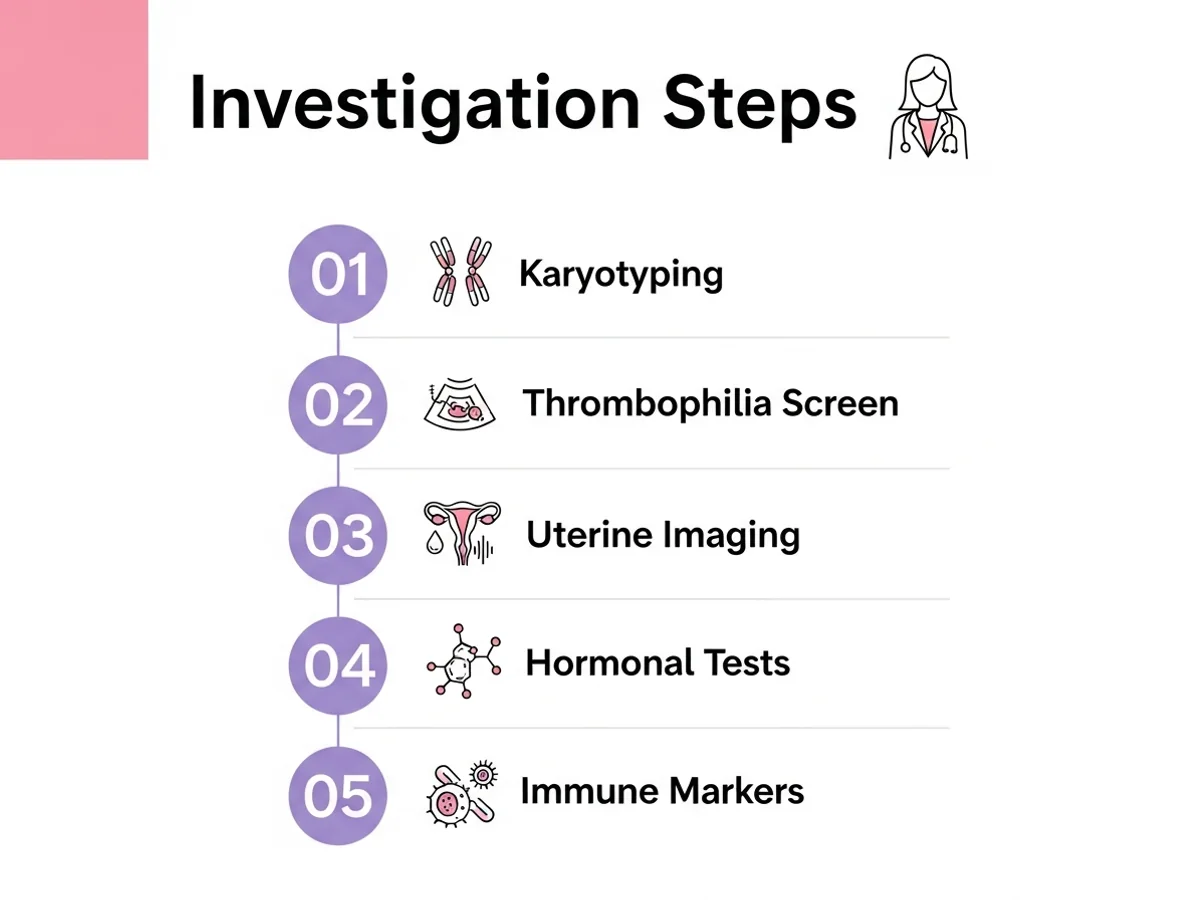
Parental Karyotyping
Chromosomal analysis of both partners to identify balanced translocations, inversions, or other structural abnormalities that could be passed to embryos.
Thrombophilia Screening
Comprehensive blood tests for antiphospholipid antibodies (lupus anticoagulant, anticardiolipin, anti-beta-2 glycoprotein), Factor V Leiden, prothrombin mutation, and protein C/S levels.
Uterine Imaging (3D Ultrasound / Hysteroscopy)
Three-dimensional ultrasound or diagnostic hysteroscopy to detect septae, fibroids, polyps, adhesions, or other structural abnormalities of the uterine cavity.
Hormonal Assessment
Thyroid function tests, prolactin, fasting glucose and insulin, progesterone levels, and other endocrine markers that affect early pregnancy viability.
Endometrial Receptivity Analysis (ERA)
A biopsy-based test that evaluates whether the uterine lining is receptive at the expected implantation window, guiding personalized embryo transfer timing.
Products of Conception (POC) Genetic Analysis
When a miscarriage occurs, chromosomal analysis of the pregnancy tissue can determine whether the loss was due to embryo aneuploidy or another cause.
Immunological Markers
NK cell levels, cytokine profiles, and other immune assessments for couples with unexplained recurrent loss, to guide targeted immunomodulatory treatment.
Infection Screening
Endometrial biopsy for chronic endometritis and screening for relevant infections that may contribute to implantation failure or early pregnancy loss.
Conditions We Treat
How We Investigate & Treat Recurrent Loss
Anticoagulant Therapy for Thrombophilia
Low-dose aspirin and/or heparin injections for women with antiphospholipid syndrome or inherited clotting disorders, initiated before conception and continued through early pregnancy to maintain placental blood flow.
Surgical Correction of Uterine Anomalies
Hysteroscopic resection of uterine septae, removal of submucosal fibroids, or lysis of intrauterine adhesions to create a normal uterine cavity that supports implantation and fetal growth.
Hormonal Support and Progesterone Supplementation
Progesterone support during the luteal phase and early pregnancy, along with correction of thyroid, prolactin, or metabolic abnormalities to maintain a stable hormonal environment.
IVF with Preimplantation Genetic Testing (PGT)
For couples with parental chromosomal abnormalities or advanced maternal age, IVF allows embryos to be tested for chromosomal normality before transfer — significantly reducing the risk of another loss.
Cervical Cerclage
A stitch placed around the cervix during early pregnancy for women with cervical insufficiency, providing structural support to prevent premature dilation and second-trimester loss.
Immunomodulatory Treatment
For selected patients with evidence of immune dysregulation, treatments such as intralipid infusion, low-dose steroids, or other immunomodulators may be considered as part of a carefully monitored protocol.
Why Choose Dr. Rukkayal?
- Systematic, leave-no-stone-unturned diagnostic approach that investigates every known cause of recurrent loss.
- Compassionate care that acknowledges the emotional toll — you are treated as a person, not just a case.
- International fellowship training (MRCOG UK, FRM Germany) ensures access to the latest evidence-based protocols.
- Direct IVF lab expertise for PGT cycles — Dr. Rukkayal oversees embryo biopsy and culture decisions firsthand.
- Multidisciplinary collaboration with hematologists, immunologists, and geneticists when specialized input is needed.
- A track record of supporting couples who have experienced multiple losses to achieve successful, healthy pregnancies.
- Convenient locations across Chennai — Kilpauk, Mylapore, Thiruvanmiyur, and Pallikaranai — plus visiting consultant at Apollo, Motherhood & Cloudnine hospitals.
Your Treatment Journey
Compassionate Initial Consultation
Dr. Rukkayal takes time to understand your complete history — every pregnancy, every loss, every investigation and treatment you have undergone. Your emotional well-being is addressed alongside the clinical assessment.
Systematic Investigation
A structured panel of tests — genetic, immunological, hormonal, anatomical, and thrombophilic — is ordered based on your specific history to identify all potential contributing factors.
Results Review and Diagnosis
Every result is explained clearly, in language you can understand. Dr. Rukkayal outlines what was found, what it means, and how it connects to your losses.
Personalized Treatment Plan
A tailored plan is created — whether it involves medication, surgery, IVF with PGT, or a combination. You are an active participant in every decision.
Pre-Conception Preparation
Before attempting the next pregnancy, all treatable factors are optimized — hormonal balance, uterine environment, clotting risk — to give this pregnancy the best possible foundation.
Supported Pregnancy and Early Monitoring
Once pregnant, close surveillance with early scans, serial HCG levels, and continued supportive treatment provides reassurance and allows early intervention if needed.
Have Questions About Your Treatment?
Book a consultation with Dr. Rukkayal Fathima to understand your options and next steps.
Frequently Asked Questions
Even after three consecutive losses, the chance of a successful subsequent pregnancy is between 60 and 75 percent with appropriate evaluation and treatment. When a treatable cause is identified and managed, the odds improve further. Dr. Rukkayal will provide a realistic, personalized prognosis based on your specific findings.
Yes. Both partners should undergo karyotyping to check for balanced chromosomal rearrangements. Additionally, the male partner's sperm DNA fragmentation can contribute to embryo quality issues. A complete evaluation of both partners provides the most comprehensive picture.
Antiphospholipid syndrome (APS) is an autoimmune condition where the body produces antibodies that promote blood clot formation. These clots can form in the tiny blood vessels of the developing placenta, cutting off the blood supply to the pregnancy. Treatment with low-dose aspirin and heparin is highly effective at preventing this.
IVF with preimplantation genetic testing (PGT-A or PGT-SR) can identify chromosomally normal embryos before transfer, significantly reducing the risk of miscarriage due to chromosomal causes. This is particularly valuable for couples with known parental translocations or advanced maternal age.
Beyond medical treatment, maintaining a healthy weight, managing stress, avoiding smoking and excessive alcohol, taking folic acid supplementation, and ensuring thyroid levels are optimized all contribute to a healthier pregnancy environment. Dr. Rukkayal provides specific lifestyle guidance as part of your treatment plan.
Physically, many women can try again after one to two normal menstrual cycles. However, if investigations are pending or treatment needs to be initiated first, Dr. Rukkayal will advise you on the optimal timing to ensure the next pregnancy has the best possible support from the start.
Approximately 25 percent of recurrent miscarriage cases remain unexplained after standard evaluation. Even in these cases, the prognosis is not poor — many couples with unexplained RPL go on to have successful pregnancies with supportive care, progesterone supplementation, and close monitoring. Emerging tests such as ERA and immunological profiling may provide additional insights.
Dr. Rukkayal offers a dedicated recurrent loss evaluation protocol that goes beyond basic screening — including genetic, immunological, and endometrial receptivity testing. Her ability to perform both diagnostic surgery and manage IVF with PGT under one roof means you receive coordinated, seamless care without referral delays.
Most guidelines recommend a formal evaluation for recurrent pregnancy loss after two consecutive miscarriages, though some specialists begin investigations after a single loss if there are additional risk factors such as advanced maternal age or a known family history of chromosomal issues. Early evaluation timing matters because identifying treatable causes sooner — such as thrombophilia, uterine anomalies, or hormonal imbalances — means the next pregnancy can be better supported from the very start.
While emotional stress and anxiety are understandably intense after repeated losses, current evidence does not support stress as a direct cause of recurrent pregnancy loss. However, chronic stress can influence lifestyle factors such as sleep, nutrition, and hormonal balance, which may indirectly affect reproductive health. Dr. Rukkayal addresses the emotional well-being of couples alongside the medical investigation, and in many cases, supportive counselling and stress management strategies are recommended as part of a holistic care plan.
Related Specialties
Female Infertility Treatment
Comprehensive evaluation for all causes of female infertility, including conditions that overlap with recurrent miscarriage.
IVF Treatment
IVF with preimplantation genetic testing to select chromosomally normal embryos and reduce miscarriage risk.
Obstetrics Care
High-risk pregnancy monitoring and early pregnancy support for women with a history of recurrent loss.
Related Articles
Chemical Pregnancy: Causes, Signs & Next Steps
What is a chemical pregnancy and why does it happen? Dr. Rukkayal explains causes, symptoms, recovery, and next steps for couples in Chennai.
10 min read
Prevent Miscarriage: What Works?
Concerned about miscarriage? Dr. Rukkayal, Chennai fertility specialist, explains prevention, risk factors, and early pregnancy precautions.
9 min read
Recurrent Miscarriage: Causes & Care
Repeated pregnancy loss has causes that can often be found and treated. Dr. Rukkayal explains diagnosis and treatment options in Chennai.
8 min read
Thyroid & Infertility: What's the Link?
Understand the link between thyroid problems and infertility in Chennai. Learn about thyroid testing and treatment options.
10 min read
Fertility Test Results Explained
Understanding your fertility test results in Chennai. Learn to interpret values and what they mean for your fertility journey.
9 min read
Ready to Get Started?
Book a consultation with Dr. Rukkayal Fathima about your treatment options
Book AppointmentBook Consultation
Consultation Booked!
Thank you for reaching out. Our team will contact you shortly to confirm your appointment.
Need urgent help? Call us