Female Infertility Treatment in Chennai
Comprehensive evaluation and personalized treatment plans for every cause of female infertility — from PCOS and endometriosis to tubal factor and age-related decline.

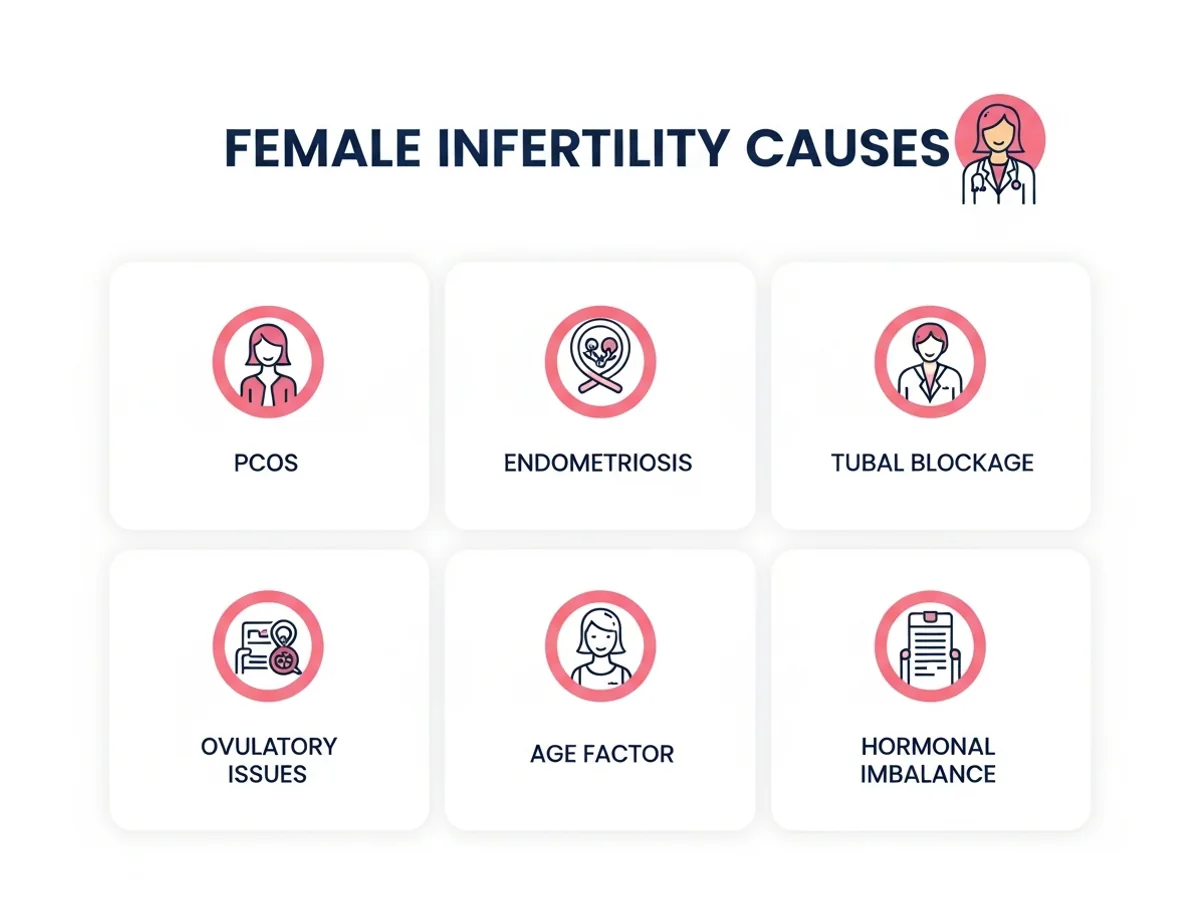
Female infertility affects approximately one in six couples trying to conceive, and in nearly 40 percent of cases the primary factor lies with the female partner. At our Chennai clinic, Dr. Rukkayal provides a thorough, evidence-based approach to identifying the root cause of difficulty conceiving — whether it stems from ovulatory disorders such as PCOS, structural conditions like tubal blockage or uterine fibroids, endometriosis, hormonal imbalances, or age-related ovarian reserve decline.
Every patient receives an individualized diagnostic workup that goes beyond routine blood tests. Dr. Rukkayal personally reviews ultrasound findings, hormone panels, and tubal patency results to build a complete clinical picture before recommending any intervention. With hands-on IVF laboratory expertise — a rarity among clinicians — she ensures that when advanced reproductive technologies are needed, every detail from egg retrieval to embryo culture is optimized for success. Our treatment philosophy prioritizes the least invasive effective option first: ovulation induction and timed intercourse where appropriate, progressing to IUI or IVF only when clinically indicated. Patients dealing with recurrent miscarriage, unexplained infertility, or complex conditions like endometriosis benefit from a multidisciplinary evaluation that addresses immunological, genetic, and anatomical factors together. Whether you are just beginning your fertility journey or have faced setbacks elsewhere, our clinic offers the clinical depth and compassionate support needed to move forward with confidence.

10,000+
Women Evaluated
65%+
Positive Outcomes Across Treatments
Warning Signs You Should Not Ignore
You should see a specialist if you experience:
- Irregular or absent menstrual cycles
- Extremely painful periods that worsen over time
- Heavy or prolonged menstrual bleeding
- Pelvic pain outside of menstruation
- Pain during intercourse
- Difficulty conceiving after 12 months of trying (or 6 months if over 35)
- Two or more consecutive pregnancy losses
- Noticeable changes in hair growth, skin, or weight without explanation
Understanding Female Infertility
Female infertility is defined as the inability to conceive after 12 months of regular, unprotected intercourse — or after 6 months for women over 35. It is far more common than most people realize: studies estimate that roughly 10 to 15 percent of women of reproductive age experience difficulty getting pregnant at some point. The causes span a wide range of conditions, from hormonal imbalances that prevent regular ovulation to structural problems in the fallopian tubes, uterus, or cervix. Polycystic Ovary Syndrome (PCOS) is the single most common ovulatory disorder, while endometriosis is a leading cause of pelvic-factor infertility. Tubal blockage — often the result of past pelvic infections or prior surgery — prevents the egg and sperm from meeting. Age-related decline in both egg quality and ovarian reserve is another significant factor, particularly after age 35 when the rate of decline accelerates. Importantly, the majority of these causes are treatable. Many women conceive with relatively simple interventions such as ovulation-inducing medications or minimally invasive surgery, while others benefit from assisted reproductive technologies like IUI or IVF. A thorough diagnostic evaluation is the essential first step: once the underlying cause is identified, a targeted treatment plan can be designed to give each patient the best possible chance of a healthy pregnancy.
Common Causes of Female Infertility
Polycystic Ovary Syndrome (PCOS)
Hormonal imbalance that disrupts regular ovulation, leading to irregular or absent menstrual cycles and difficulty releasing a mature egg each month.
Endometriosis
Tissue similar to the uterine lining grows outside the uterus, causing inflammation, scarring, and adhesions that can impair egg quality, tubal function, and embryo implantation.
Tubal Blockage or Damage
Blocked or damaged fallopian tubes prevent the sperm from reaching the egg or the fertilized embryo from traveling to the uterus. Often caused by pelvic infections, prior surgery, or ectopic pregnancy.
Ovulatory Disorders
Conditions beyond PCOS — including hypothalamic amenorrhea, hyperprolactinemia, and premature ovarian insufficiency — that prevent consistent or adequate ovulation.
Age-Related Ovarian Reserve Decline
Both the quantity and quality of eggs decline naturally with age, accelerating after 35 and becoming pronounced after 40, reducing the chance of conception per cycle.
Uterine Fibroids and Polyps
Non-cancerous growths in or on the uterus can distort the uterine cavity, interfere with embryo implantation, or disrupt blood supply to the endometrium.
Thyroid and Hormonal Imbalances
Underactive or overactive thyroid function, elevated prolactin, or adrenal hormone abnormalities can disrupt the delicate hormonal signalling required for ovulation and implantation.
Unexplained Infertility
In approximately 15 to 20 percent of couples, standard investigations do not reveal a clear cause — advanced testing and empirical treatment strategies are often effective.
Recurrent Miscarriage
Two or more consecutive pregnancy losses may point to underlying chromosomal, anatomical, hormonal, or immunological factors that require specialized investigation.
Lifestyle and Environmental Factors
Significant weight fluctuations, chronic stress, smoking, excessive alcohol intake, and exposure to environmental toxins can all impair ovarian function and fertility.
How We Diagnose Female Infertility
Hormonal Panel (Day 2/3)
Blood tests for FSH, LH, estradiol, AMH, prolactin, and thyroid hormones to evaluate ovarian reserve and hormonal balance.
Transvaginal Ultrasound
High-resolution imaging to assess antral follicle count, ovarian morphology, uterine structure, endometrial thickness, and detect fibroids or polyps.
Hysterosalpingography (HSG)
An X-ray-based test using contrast dye to check whether the fallopian tubes are open and the uterine cavity is normal in shape.
Saline Infusion Sonography (SIS)
Sterile saline is introduced into the uterus during ultrasound to provide a clearer view of the uterine cavity and identify polyps, fibroids, or adhesions.
Ovulation Tracking
Serial ultrasound monitoring combined with blood progesterone levels to confirm whether and when ovulation occurs during a natural cycle.
Diagnostic Hysteroscopy
A thin camera inserted through the cervix allows direct visualization and potential treatment of intrauterine pathology in a single procedure.
Laparoscopy
Minimally invasive keyhole surgery to evaluate and treat endometriosis, tubal disease, adhesions, or other pelvic pathology not visible on imaging.
Genetic and Immunological Screening
Karyotyping, thrombophilia panels, and autoimmune markers for patients with recurrent miscarriage or unexplained implantation failure.
Conditions We Treat
Our Approach to Female Fertility
Ovulation Induction
Oral or injectable medications to stimulate regular ovulation in women with PCOS or other anovulatory conditions, monitored with serial ultrasound to optimize timing.
Intrauterine Insemination (IUI)
Processed, concentrated sperm is placed directly into the uterus around the time of ovulation, improving the chances of fertilization for mild male factor or unexplained infertility.
In Vitro Fertilization (IVF)
Eggs are retrieved, fertilized in the laboratory under Dr. Rukkayal's direct supervision, and the resulting embryos are transferred to the uterus — indicated for tubal factor, severe endometriosis, or failed simpler treatments.
Minimally Invasive Surgery
Laparoscopic or hysteroscopic procedures to remove fibroids, treat endometriosis, correct uterine anomalies, or open blocked tubes — often restoring natural fertility.
Hormonal and Metabolic Optimization
Targeted management of thyroid disorders, insulin resistance, hyperprolactinemia, and weight-related hormonal imbalances to restore the body's natural reproductive function.
Recurrent Pregnancy Loss Management
Comprehensive investigation including genetic, immunological, and anatomical evaluations followed by individualized treatment protocols to support a healthy pregnancy.
Why Choose Dr. Rukkayal?
- Direct IVF laboratory expertise — Dr. Rukkayal is hands-on in overseeing critical embryology steps, ensuring clinical and lab decisions are fully coordinated.
- Dual international fellowship (MRCOG UK and FRM Germany) bringing global best practices to every treatment plan.
- Individualized protocols rather than one-size-fits-all — your treatment is tailored to your specific diagnosis, age, and reproductive goals.
- Full diagnostic and surgical capability under one roof, from ultrasound and hysteroscopy to advanced laparoscopy.
- Transparent, step-by-step communication so you understand every phase of your evaluation and treatment.
- Compassionate, patient-first approach that respects the emotional weight of the fertility journey.
- Convenient locations across Chennai — Kilpauk, Mylapore, Thiruvanmiyur, and Pallikaranai — plus visiting consultant at Apollo, Motherhood & Cloudnine hospitals.
Your Treatment Journey
Initial Consultation
A detailed review of your medical, menstrual, and reproductive history along with any previous investigations or treatments. Dr. Rukkayal will explain what to expect and outline a diagnostic plan.
Comprehensive Diagnostic Workup
Targeted blood tests, ultrasound assessments, and any additional investigations (HSG, hysteroscopy, or laparoscopy) needed to identify the specific cause of infertility.
Diagnosis and Treatment Planning
All results are reviewed together with you. Dr. Rukkayal presents a clear diagnosis, explains every treatment option, and collaborates with you to choose the most appropriate path forward.
Treatment Initiation
Whether it is ovulation induction, IUI, surgical correction, or IVF, treatment begins with close monitoring, regular follow-ups, and adjustments as needed.
Ongoing Monitoring and Support
Serial ultrasounds and hormone checks ensure your body is responding well. The treatment plan is refined based on real-time data to maximize your chances of success.
Pregnancy Confirmation and Early Care
Once conception is achieved, early pregnancy monitoring — including blood HCG levels and viability scans — provides reassurance during the critical first weeks.
Have Questions About Your Treatment?
Book a consultation with Dr. Rukkayal Fathima to understand your options and next steps.
Frequently Asked Questions
The first step is a thorough fertility evaluation that includes a hormonal panel, ultrasound assessment, and a tubal patency test. For your partner, a semen analysis is equally important. These baseline investigations often identify the cause and guide the most effective treatment.
Not necessarily. Many women with PCOS conceive with ovulation induction medications alone or combined with IUI. IVF is typically recommended only when simpler treatments have not been successful or when additional factors such as tubal disease or significant male factor are present.
Endometriosis can impair fertility through inflammation, adhesions, reduced egg quality, and tubal damage. Mild cases may respond to targeted medical management or surgery, while moderate to severe endometriosis often benefits from IVF, which bypasses the affected tubes and pelvic environment.
Egg quality and quantity decline meaningfully after age 35. If you are not planning pregnancy in the near term, freezing eggs before 35 preserves higher-quality oocytes. However, women between 35 and 38 can still benefit. Dr. Rukkayal can assess your ovarian reserve with AMH and antral follicle count to guide this decision.
Anti-Mullerian Hormone (AMH) reflects your ovarian reserve — the number of eggs remaining. A low AMH suggests a reduced egg supply, but it does not directly measure egg quality. Many women with low AMH conceive successfully with appropriately tailored treatment protocols.
In some cases, yes. If the blockage is at the proximal end, a tubal cannulation procedure may restore patency. Distal tubal blockage or hydrosalpinx can sometimes be addressed with laparoscopic surgery. However, if tubal damage is severe or bilateral, IVF offers the highest success rate.
Yes. Two or more consecutive pregnancy losses warrant a comprehensive evaluation including genetic testing, uterine imaging, thrombophilia screening, and hormonal assessment. Identifying and addressing the underlying cause significantly improves the chances of carrying a future pregnancy to term.
Both hypothyroidism and hyperthyroidism can disrupt ovulation, impair implantation, and increase miscarriage risk. A simple TSH blood test can detect thyroid abnormalities, and treatment with medication often restores normal fertility relatively quickly.
Dr. Rukkayal combines clinical fertility expertise with direct IVF laboratory training — meaning she understands not only how to diagnose and plan treatment but also the embryology processes that determine IVF outcomes. This dual capability allows her to make real-time adjustments that many purely clinical specialists cannot.
Timelines vary by treatment. Ovulation induction with timed intercourse takes about two weeks per cycle. An IUI cycle is similar. A complete IVF cycle — from stimulation to embryo transfer — typically spans four to six weeks. Dr. Rukkayal will provide a clear timeline specific to your plan during the consultation.
Related Specialties
PCOS Treatment
Specialized management of polycystic ovary syndrome to restore ovulation and improve fertility outcomes.
Endometriosis Treatment
Targeted diagnosis and treatment of endometriosis to relieve symptoms and enhance your chances of conception.
IVF Treatment
Advanced in vitro fertilization with Dr. Rukkayal's direct embryology oversight for optimized success rates.
Gynecology Care
Comprehensive gynaecological care — menstrual disorders, fibroids, preventive screening, and women's health.
Recurrent Miscarriage
Investigation and treatment for women experiencing repeated pregnancy loss.
Ovulation Induction
Medication-based ovulation support for anovulatory infertility and PCOS.
Preconception Care
Planning a pregnancy? Start with a pre-pregnancy health checkup before you conceive.
Ultrasound Services
Diagnostic ultrasound for ovarian reserve assessment, follicular tracking, and uterine evaluation.
Fertility Preservation
Egg and embryo freezing options for women planning to delay pregnancy or facing medical treatment.
Related Articles
Signs of High Fertility in a Woman
Wondering about signs of high fertility? Dr. Rukkayal in Chennai explains indicators and when to seek assessment. Learn more.
10 min read
Age-Related Fertility Decline: Causes, Tests & Treatment Options
How age affects fertility in women and men. Dr. Rukkayal explains ovarian reserve, egg quality, AMH testing, and treatment options in Chennai.
11 min read
Trouble Conceiving After 1 Year: Next Steps
Not getting pregnant after 1 year of trying? Dr. Rukkayal explains common causes, when to see a fertility specialist in Chennai, and what tests to expect.
9 min read
AMH Levels Explained
Understand AMH levels & fertility. Expert insights from Dr. Rukkayal Fathima, Chennai's leading fertility specialist.
7 min read
Blocked Fallopian Tubes Treatment
Blocked fallopian tubes are a common, treatable cause of infertility. Dr. Rukkayal explains diagnosis, treatment, and IVF options in Chennai.
9 min read
Endometrial Thickness for Pregnancy
Understand endometrial thickness for pregnancy and IVF success. Expert insights from Dr. Rukkayal, Chennai's leading fertility specialist.
8 min read
Low Ovarian Reserve Treatment Options
Low ovarian reserve does not mean the end of the road. Dr. Rukkayal explains the tests, treatment options, and IVF protocols available in Chennai.
12 min read
Ovarian Cysts & Fertility
Understand the impact of ovarian cysts on fertility and treatment options in Chennai. Expert guidance from Dr. Rukkayal Fathima.
9 min read
Explore more articles(30)
- Painful Periods & Fertility: What's the Link?
- Secondary Infertility: Causes & Solutions
- Thyroid & Infertility: What's the Link?
- Understanding Unexplained Infertility
- Minimal Free Fluid in POD: Good or Bad?
- Does Masturbation Cause Infertility in Women?
- Fertility Treatment: Wellbeing Matters
- Fertility Myths Debunked
- Hormonal Imbalance & Infertility
- When to See a Fertility Doctor
- Fertility Test Results Explained
- Weight & Fertility: The Chennai Connection
- Do I Need a Fertility Doctor?
- Is Unwanted 72 Harmful for Future Pregnancy?
- Masturbation & Weight Gain in Females
- 3-Month Preconception Checklist for a Healthy Start
- Average Time to Conceive by Age: What to Expect
- Best Fertility Supplements: What Works for Conception
- Does Stress Cause Infertility? The Real Link
- Early Signs You Might Be Struggling to Conceive
- How Conception Works: Your Journey to Pregnancy
- How Smoking, Alcohol, Caffeine Affect Fertility
- Adenomyosis & Fertility: What You Need to Know
- Anti-Müllerian Hormone (AMH) Test: Complete Guide
- How to Increase AMH Level Naturally
- Endometriosis & Fertility: Impact & Options
- Endometriosis Surgery: Fertility Impact
- Fibroid Removal & Fertility
- Recurrent Miscarriage: Causes & Care
- Fibroids & Fertility: Impact & Treatment
Ready to Get Started?
Book a consultation with Dr. Rukkayal Fathima about your treatment options
Book AppointmentBook Consultation
Consultation Booked!
Thank you for reaching out. Our team will contact you shortly to confirm your appointment.
Need urgent help? Call us