IUI Treatment in Chennai
A less invasive first-line fertility treatment that combines timed insemination with ovulation support for natural conception

Intrauterine insemination (IUI) — a form of artificial insemination — is often the first assisted reproductive treatment offered to couples with mild fertility challenges. It involves placing washed and concentrated sperm directly into the uterus around the time of ovulation, significantly shortening the distance sperm must travel to reach the egg. IUI is less invasive, requires no anaesthesia, and can be combined with ovulation-inducing medications to improve timing and egg maturity.
Dr. Rukkayal carefully evaluates each couple before recommending IUI, ensuring that at least one fallopian tube is open, sperm parameters meet minimum thresholds, and there are no uterine abnormalities that could reduce success. When IUI is appropriate, it offers a gentler, more affordable entry point into fertility treatment. Cycles are closely monitored with serial ultrasound scans to track follicle growth and precisely time the insemination. For patients with irregular ovulation — particularly those with PCOS — IUI combined with ovulation induction medications like letrozole or clomiphene can restore predictable cycles and significantly improve conception chances. Dr. Rukkayal provides honest guidance about when IUI is a reasonable option and when stepping up to IVF would give you a meaningfully better chance, ensuring you never spend time on a treatment unlikely to succeed.
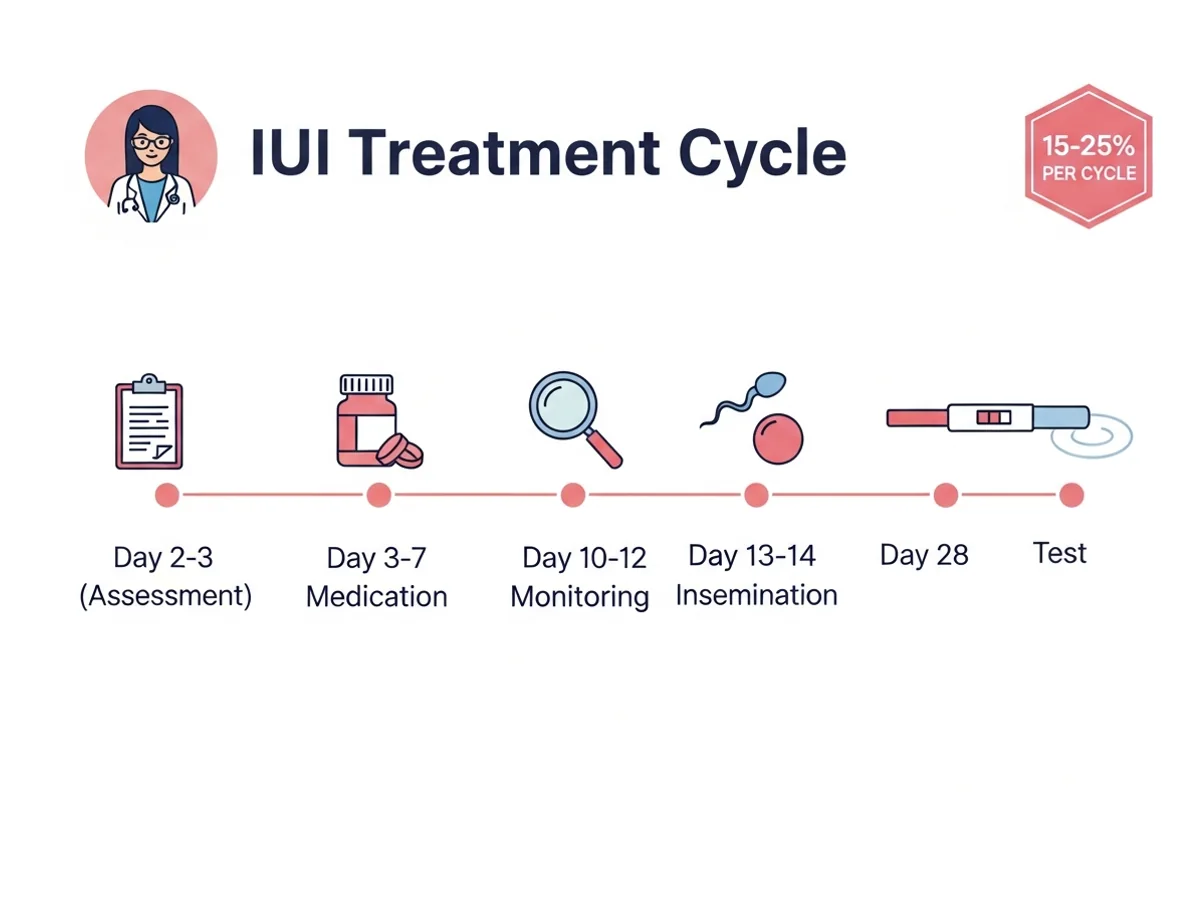
15-25%
Per-Cycle Success Rate
40-50%
Cumulative Rate (3 Cycles)
4000+
IUI Cycles Performed
When Is IUI a Good Option?
You should see a specialist if you experience:
- Mild male factor infertility with adequate sperm motility
- Unexplained infertility with open fallopian tubes
- Cervical factor infertility or hostile cervical mucus
- You prefer a less invasive approach before considering IVF
- Ovulation disorders that respond well to medication
Understanding IUI: How Timed Insemination Works
During IUI, a semen sample is processed in the laboratory to separate the most motile, healthy sperm from seminal fluid, debris, and non-motile cells. This concentrated sample is then placed directly into the uterine cavity using a thin, flexible catheter — a process that takes under a minute and causes minimal discomfort. By bypassing the cervix and depositing sperm closer to the fallopian tubes, IUI increases the number of sperm available at the site of fertilisation. Fertilisation itself occurs naturally within the fallopian tube.
Conditions We Treat
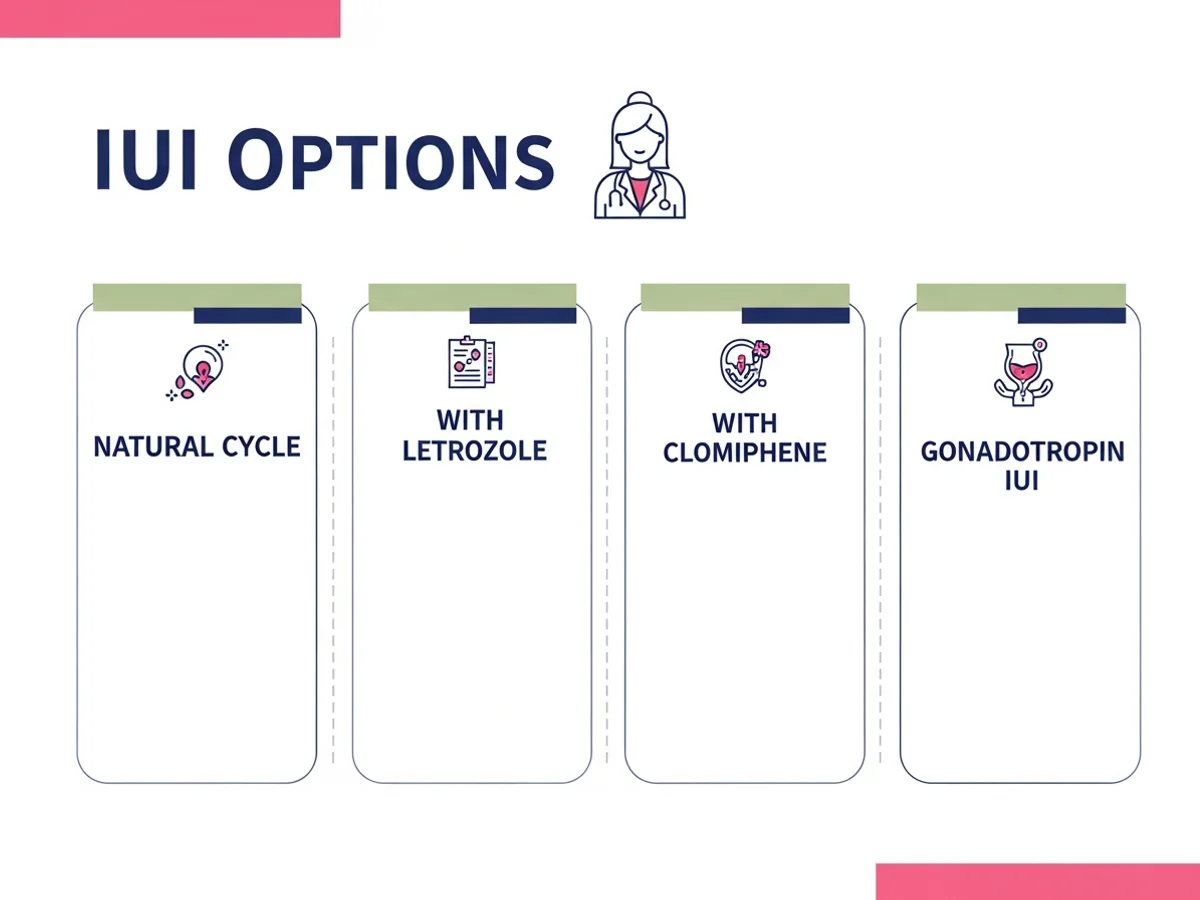
IUI Treatment Protocols
Natural Cycle IUI
IUI timed to your natural ovulation using LH surge detection and ultrasound monitoring. No fertility medications are used. Suitable for couples with regular ovulation and unexplained infertility.
Medicated IUI with Letrozole
Letrozole stimulates the development of one to two mature follicles, improving ovulation predictability. Combined with IUI, this is the most common first-line protocol for PCOS and mild ovulatory dysfunction.
Medicated IUI with Clomiphene
Clomiphene citrate induces ovulation by stimulating FSH release. Effective for anovulatory patients, though Dr. Rukkayal monitors closely for multiple follicle development to minimise twin risk.
Gonadotropin-Stimulated IUI
Low-dose injectable gonadotropins produce controlled follicle growth when oral medications have been insufficient. Requires careful monitoring to avoid ovarian hyperstimulation and high-order multiples.
Why Choose Dr. Rukkayal?
- Thorough pre-IUI assessment ensures you are a genuine candidate — no wasted cycles on treatments unlikely to succeed.
- Precise ultrasound-guided follicle tracking to optimise insemination timing within the fertile window.
- Advanced sperm preparation techniques that maximise the concentration of motile, healthy sperm.
- Honest counselling about when to continue IUI versus when IVF offers a substantially better outcome.
- International training ensures evidence-based protocol selection rather than a trial-and-error approach.
- Convenient locations across Chennai — Kilpauk, Mylapore, Thiruvanmiyur, and Pallikaranai — plus visiting consultant at Apollo, Motherhood & Cloudnine hospitals.
Your Treatment Journey
Fertility Assessment and IUI Eligibility
Baseline hormone testing, tubal patency assessment (HSG or sono-salpingography), and semen analysis confirm that IUI is appropriate for your situation. Dr. Rukkayal reviews all results to set realistic expectations.
Ovulation Monitoring or Induction
Serial ultrasound scans track follicle development from cycle day 2 onwards. If medications are used, dose adjustments are made based on your ovarian response. A trigger injection may be given to time ovulation precisely.
Semen Collection and Preparation
A semen sample is provided on the day of insemination. The laboratory washes and concentrates the sample, isolating the most motile sperm fraction for insemination.
Intrauterine Insemination
The prepared sperm sample is gently placed into the uterine cavity through a thin catheter. The procedure takes under a minute, requires no anaesthesia, and most patients resume normal activities immediately.
Luteal Phase Support and Pregnancy Test
Progesterone supplementation may be prescribed to support the uterine lining. A pregnancy test is performed 14 to 16 days after insemination. If unsuccessful, Dr. Rukkayal reviews the cycle before planning next steps.

Have Questions About Your Treatment?
Book a consultation with Dr. Rukkayal Fathima to understand your options and next steps.
Frequently Asked Questions
IUI works best for couples with unexplained infertility, mild male factor (total motile count above 5 million post-wash), ovulatory dysfunction responding to medication, cervical factor infertility, or single women using donor sperm. At least one open fallopian tube is essential. Dr. Rukkayal confirms eligibility through a thorough workup before starting.
Evidence supports attempting three to four well-timed IUI cycles before transitioning to IVF. If you have not conceived after three medicated IUI cycles with good follicle response and adequate sperm counts, success rates with additional IUI cycles plateau. Dr. Rukkayal discusses this timeline openly from the first consultation.
IUI is a low-risk procedure. The main considerations are mild, short-lived cramping or spotting after the catheter is placed, a small chance of multiple pregnancy (around 10 to 15 percent) when ovulation-stimulating medication is used, and a rare risk of pelvic infection. Dr. Rukkayal minimises these by monitoring follicle numbers on scan and using sterile technique, so for most couples artificial insemination remains one of the safest and gentlest fertility treatments.
Most patients experience no more than mild cramping during the catheter insertion, similar to a Pap smear. The entire insemination takes under a minute. No anaesthesia is needed, and you can return to normal activities immediately afterwards. Occasionally, light spotting may occur but resolves quickly.
A single well-timed IUI cycle has a 15 to 25 percent success rate, depending on age, sperm quality, and whether ovulation medications are used. Medicated cycles generally perform better than natural cycle IUI. Cumulative success over three to four cycles can reach 40 to 50 percent for suitable candidates.
Natural cycle IUI carries no increased twin risk. Medicated IUI may produce multiple follicles, raising the possibility of twins to roughly 10 to 15 percent. Dr. Rukkayal monitors follicle count carefully and may cancel the cycle or convert to IVF if too many follicles develop, prioritising your safety.
The lab processes the semen sample using density gradient centrifugation or swim-up technique. This separates highly motile, morphologically normal sperm from seminal fluid, dead cells, and debris. The resulting concentrated sample is placed directly into the uterus, maximising the chance of sperm reaching the egg.
IUI requires a minimum post-wash total motile sperm count of about 5 million for reasonable success. Below this threshold, the chance of fertilisation drops significantly, and ICSI with IVF becomes a more effective option. Dr. Rukkayal evaluates your specific semen analysis to advise honestly.
Natural cycle IUI relies on your body ovulating on its own and is best for women with regular cycles. Medicated IUI uses oral medications or low-dose injectables to stimulate follicle growth, improving ovulation timing and sometimes producing two follicles instead of one. Medicated cycles generally have higher per-cycle success rates.
Bed rest is not required after intrauterine insemination. Most patients resume normal daily activities immediately after the procedure. Some women prefer to rest for 15 to 30 minutes in the clinic before leaving, but studies have not shown any benefit from prolonged bed rest on pregnancy outcomes. Avoiding very strenuous exercise for a day or two is a reasonable precaution, though routine movement and work are perfectly fine.
IUI can be effective when sperm motility is mildly reduced, because the laboratory preparation concentrates the most actively moving sperm and places them directly into the uterine cavity, bypassing the cervix. However, if the post-wash total motile sperm count falls below approximately 5 million, the likelihood of success with insemination drops considerably, and IVF with ICSI may offer a more realistic path to conception.
IUI is one of the more affordable fertility treatments. In Chennai, each IUI cycle typically costs between Rs 10,000 and Rs 20,000, which includes ultrasound monitoring, sperm washing, and the insemination procedure. If ovulation induction medications are needed, that may add Rs 5,000 to Rs 15,000 depending on the protocol. Most couples attempt two to four IUI cycles before considering IVF, keeping the total investment manageable. We provide a clear cost estimate during your first consultation.
Related Specialties
Ovulation Induction
Medication-based ovulation support that is often combined with IUI for improved timing and success.
IVF Treatment
The next step when IUI has not succeeded, offering significantly higher per-cycle pregnancy rates.
Female Fertility
Comprehensive evaluation of ovulatory, tubal, and uterine factors affecting natural conception.
Related Articles
IUI Treatment Cost in Chennai: 2026 Guide
IUI treatment cost in Chennai (2026): Dr. Rukkayal explains per-cycle pricing, medications, success rates, and when IUI is the right choice before IVF.
9 min read
Two Week Wait After IUI: What To Expect
Navigating the two-week wait after IUI in Chennai? Understand symptoms, tips & when to seek expert guidance for early pregnancy signs.
9 min read
How Many IUI Cycles Before IVF?
Understand how many IUI cycles to try before IVF in Chennai. Expert guidance on success rates and factors influencing the decision.
11 min read
Is IUI Painful? What to Expect
Worried about IUI? Dr. Rukkayal Fathima explains the IUI pain level, what to expect, and tips for comfort in Chennai.
10 min read
IUI Success Rate By Age
IUI success rate by age in Chennai. Understand the factors affecting IUI success and how age impacts your chances. Expert insights from Dr. Rukkayal.
10 min read
IUI Success Rate First Try: Honest Answers
Understand IUI success rates on the first try in Chennai. Learn factors affecting IUI success and how to improve your chances.
12 min read
IUI Treatment Process Explained
Learn about the IUI treatment process step-by-step in Chennai. Understand success rates, costs, and what to expect.
12 min read
Follicular Monitoring: Your Chennai Guide
Learn about follicular monitoring in Chennai: process, benefits, cost, and success rates. Expert guidance from Dr. Rukkayal Fathima.
8 min read
Ready to Get Started?
Book a consultation with Dr. Rukkayal Fathima about your treatment options
Book AppointmentBook Consultation
Consultation Booked!
Thank you for reaching out. Our team will contact you shortly to confirm your appointment.
Need urgent help? Call us