ICSI Treatment in Chennai
Precision sperm selection under high magnification for optimal fertilisation in challenging male factor cases
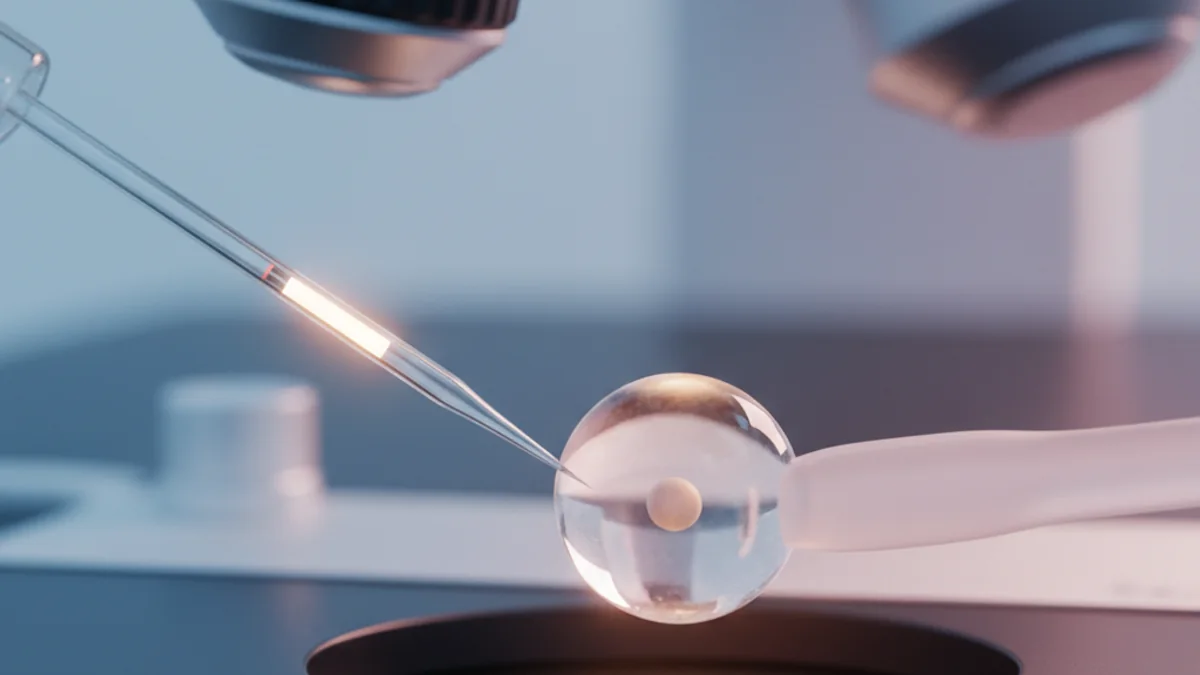
Intracytoplasmic sperm injection (ICSI) is a specialised fertilisation technique where a single carefully selected sperm is injected directly into a mature egg. It is the treatment of choice when sperm count, motility, or morphology are significantly impaired — or when sperm must be surgically retrieved. At our Chennai centre, Dr. Rukkayal personally performs sperm selection under high-power magnification, applying her direct lab training to identify the healthiest sperm for each egg.
ICSI has transformed outcomes for couples where male factor infertility was once considered untreatable. Whether sperm are obtained from ejaculate, TESA, or micro-TESE, Dr. Rukkayal evaluates motility patterns, morphology, and vitality before selecting the optimal sperm for injection. Her hands-on involvement at this critical step — rather than delegating entirely to a technician — means clinical context informs every laboratory decision. This integrated approach is particularly valuable in cases of high sperm DNA fragmentation, previous IVF fertilisation failure, or very low surgical sperm yields where every retrieved sperm matters. Couples receive a clear explanation of why ICSI is recommended over standard IVF, what the fertilisation expectations are, and how embryo development will be tracked through to transfer.
90%
ICSI Fertilisation Rate
60%
Clinical Pregnancy Rate
1500
Male Factor Cases Treated
When Is ICSI Recommended?
You should see a specialist if you experience:
- Very low sperm count or poor sperm motility
- Previous IVF cycle with poor or failed fertilisation
- Sperm retrieved surgically through TESA or Micro TESE
- High levels of anti-sperm antibodies
- Unexplained fertilisation failure in a prior cycle
ICSI vs Standard IVF: When Direct Injection Matters
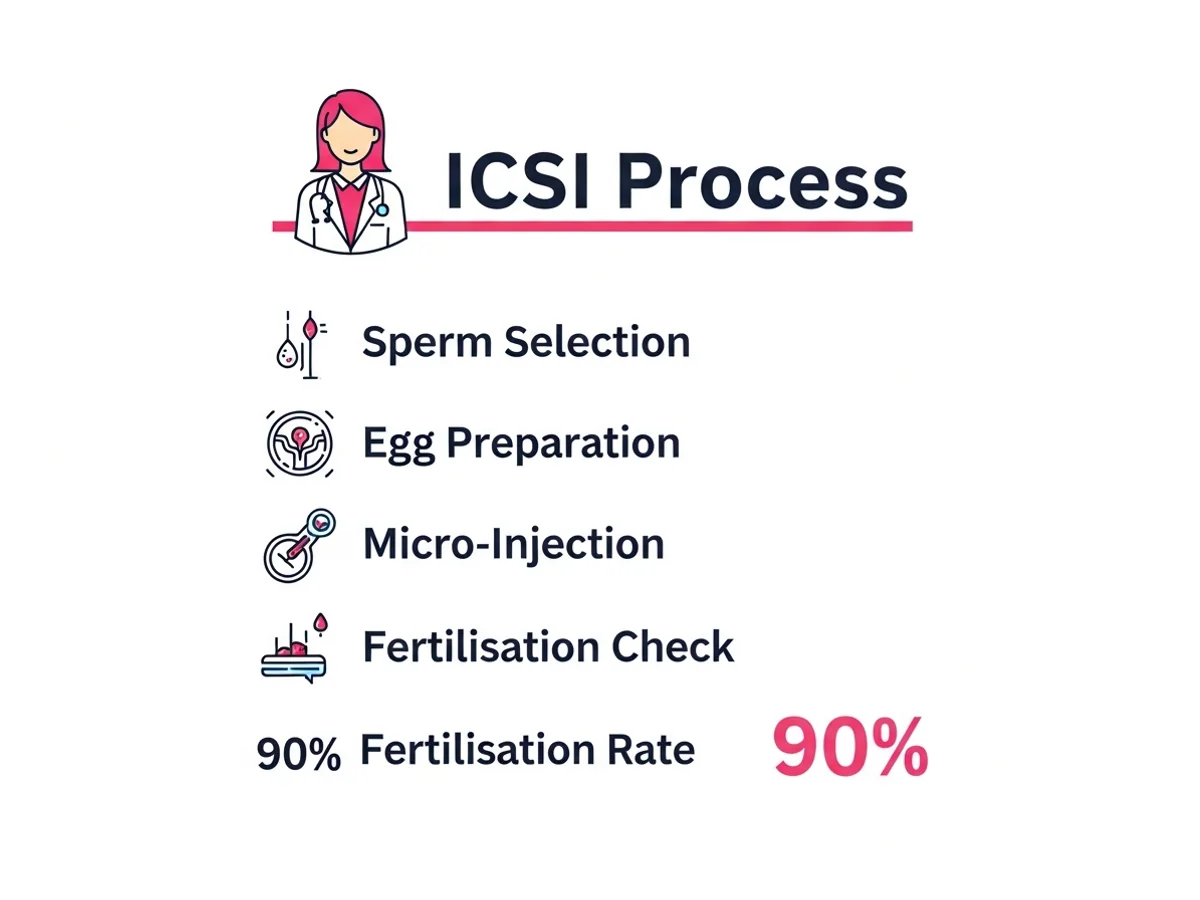
In standard IVF, thousands of sperm are placed around each egg and fertilisation occurs naturally. ICSI bypasses this by injecting one sperm directly into the egg cytoplasm. This is essential when sperm numbers are too low for natural penetration, when sperm cannot move well enough to reach the egg, when previous IVF cycles showed poor or zero fertilisation, or when surgically retrieved sperm are being used. ICSI fertilisation rates typically reach 90 percent when performed by experienced hands.
Conditions We Treat
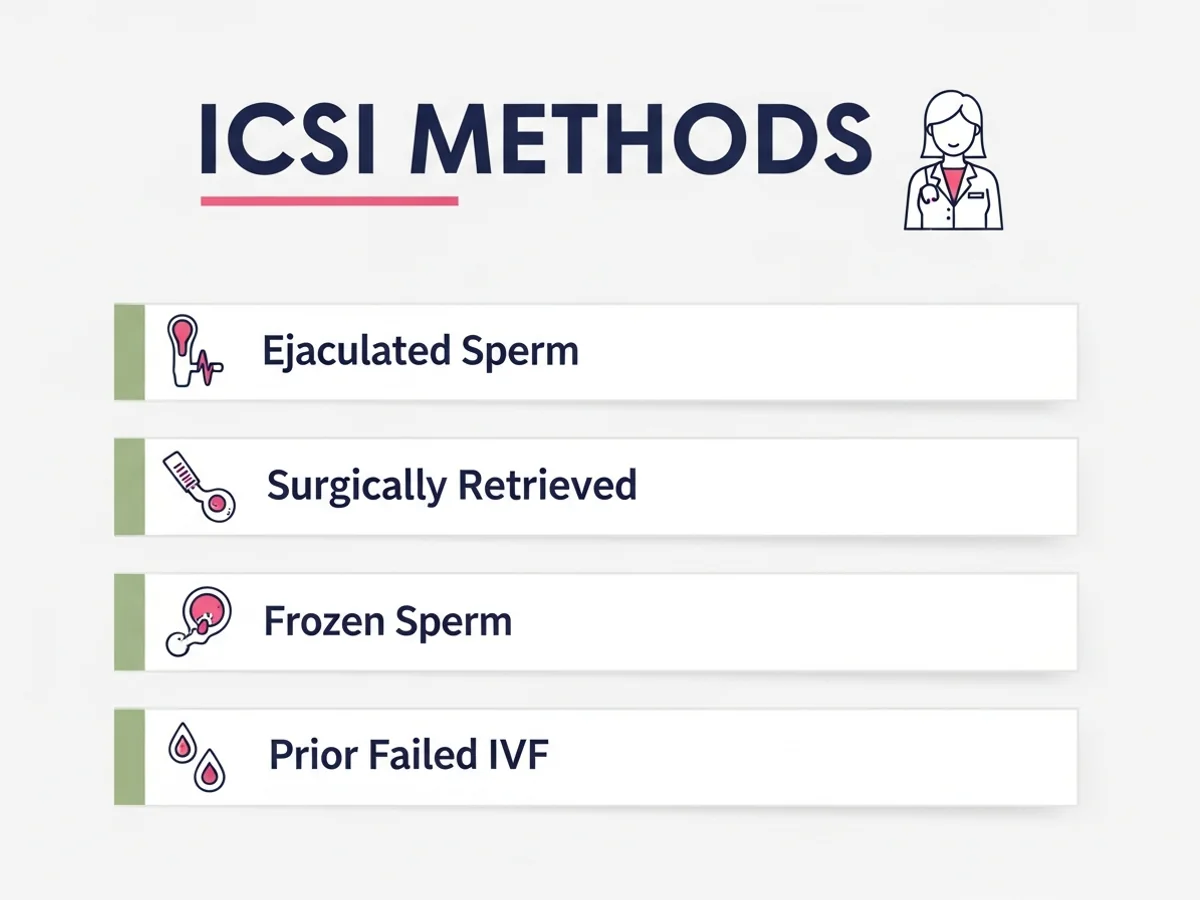
ICSI Treatment Options
ICSI with Ejaculated Sperm
The most common scenario — sperm from a fresh or frozen semen sample are assessed under magnification, and the best individual sperm is selected for injection into each mature egg.
ICSI with Surgically Retrieved Sperm
For men with obstructive or non-obstructive azoospermia, sperm obtained via TESA or micro-TESE are used for ICSI. Even a small number of viable sperm can achieve fertilisation through direct injection.
ICSI with Frozen Sperm
Previously cryopreserved sperm — whether from a surgical retrieval, a backup sample, or fertility preservation — can be thawed and used for ICSI with excellent fertilisation outcomes.
ICSI for Previous Fertilisation Failure
When standard IVF produced poor or zero fertilisation, ICSI ensures sperm entry into the egg, overcoming barriers related to sperm binding or zona penetration defects.
Why Choose Dr. Rukkayal?
- With her direct involvement, Dr. Rukkayal selects sperm under high-power magnification, applying morphological and motility criteria at the individual cell level.
- Extensive experience with surgically retrieved sperm — TESA and micro-TESE samples where every viable sperm is precious.
- International lab training from Germany ensures world-class micromanipulation technique and equipment standards.
- Seamless coordination between clinical and lab decisions — the same doctor managing your treatment is evaluating your gametes.
- Fertilisation rates consistently above 75 percent, benchmarked against international standards.
- Convenient locations across Chennai — Kilpauk, Mylapore, Thiruvanmiyur, and Pallikaranai — plus visiting consultant at Apollo, Motherhood & Cloudnine hospitals.
Your Treatment Journey
Male Factor Evaluation
Detailed semen analysis including morphology, DNA fragmentation assessment when indicated, and hormonal evaluation. If azoospermia is present, surgical sperm retrieval options are discussed.
Treatment Planning
Dr. Rukkayal explains why ICSI is recommended for your case, outlines the stimulation protocol for the female partner, and coordinates any surgical sperm retrieval timing.
Ovarian Stimulation and Egg Retrieval
The female partner undergoes standard IVF stimulation and egg retrieval. Mature eggs are identified and prepared for the ICSI procedure.
Sperm Selection and Injection
Dr. Rukkayal selects the best sperm under magnification and injects one sperm into each mature egg using a precision micromanipulation system. Fertilisation is assessed 16 to 18 hours later.
Embryo Culture and Grading
Fertilised embryos are cultured for three to five days. Each embryo is graded at key developmental checkpoints, and the highest-quality embryo is selected for transfer.
Embryo Transfer and Follow-Up
The selected embryo is transferred to the uterus under ultrasound guidance. Luteal phase support is provided, and a pregnancy test is scheduled 12 to 14 days later.

Have Questions About Your Treatment?
Book a consultation with Dr. Rukkayal Fathima to understand your options and next steps.
Frequently Asked Questions
ICSI is recommended when total motile sperm count is below 5 million, when sperm morphology is severely abnormal, after previous IVF cycles with poor fertilisation, when using surgically retrieved sperm (TESA or micro-TESE), or when using frozen sperm with reduced post-thaw motility. Dr. Rukkayal assesses your specific semen parameters to determine the best approach.
Using high-powered magnification, Dr. Rukkayal evaluates each sperm for progressive motility, head shape, and structural integrity. She personally selects sperm that demonstrate the healthiest morphology and movement pattern, ensuring that clinical knowledge of your case directly informs this critical laboratory decision.
For male factor cases, ICSI significantly improves fertilisation rates — typically 75 to 85 percent of injected mature eggs will fertilise. Standard IVF with severely impaired sperm may result in very low or zero fertilisation. ICSI ensures direct sperm delivery into the egg, though fertilisation still depends on egg quality.
Yes. ICSI requires only one viable sperm per egg. Even when TESA or micro-TESE yields a small number of sperm, ICSI can achieve fertilisation. Dr. Rukkayal has extensive experience handling precious surgical samples where careful selection from limited material is essential.
Large population studies confirm that ICSI children have the same developmental outcomes as naturally conceived children. The technique has been used worldwide since the early 1990s with an extensive safety record. Any marginally increased risks relate to the underlying infertility factors rather than the ICSI procedure itself.
No. The stimulation, egg retrieval, embryo culture, and transfer process is identical to standard IVF. The only difference occurs in the laboratory — instead of placing sperm around the egg, a single sperm is injected directly. The female partner experiences the same treatment timeline and protocol.
Low ICSI fertilisation usually points to egg quality factors or oocyte activation issues. Dr. Rukkayal may recommend calcium ionophore assisted activation, modified stimulation protocols to improve egg maturity, or additional investigations such as sperm DNA fragmentation testing to guide the next cycle strategy.
Absolutely. When DNA fragmentation is elevated, ICSI allows Dr. Rukkayal to select sperm with better morphological indicators, which often correlates with lower fragmentation. Additional techniques such as MACS (magnetic activated cell sorting) may be recommended to further select sperm with intact DNA.
When sperm parameters are normal, standard IVF and intracytoplasmic sperm injection produce comparable fertilisation and pregnancy rates. However, in cases of significant male factor infertility, ICSI typically achieves much higher fertilisation rates — 75 to 85 percent — because it bypasses the need for sperm to penetrate the egg naturally. Dr. Rukkayal recommends the approach that best fits your clinical situation rather than applying one method universally.
Extensive research involving hundreds of thousands of children conceived through intracytoplasmic sperm injection shows no clinically significant increase in birth defect rates attributable to the procedure itself. Any marginally elevated risks observed in some studies are generally linked to the underlying parental infertility factors rather than the microinjection technique. ICSI has a well-established safety profile spanning over three decades of clinical use worldwide.
ICSI is typically performed as part of an IVF cycle, and the additional cost for the ICSI procedure itself ranges from Rs 15,000 to Rs 30,000 on top of the standard IVF cycle fee. The total cost including stimulation medications, egg retrieval, ICSI, embryo culture, and transfer generally falls between Rs 1.5 lakh and Rs 3.5 lakh. We provide a transparent cost estimate during your consultation based on your specific treatment plan.
Related Specialties
IVF Treatment
Comprehensive IVF programmes with personalised protocols and direct lab expertise.
Male Fertility
Complete male factor evaluation including advanced semen analysis and hormonal assessment.
TESA / Micro-TESE
Surgical sperm retrieval for men with azoospermia, coordinated with ICSI for fertilisation.
Related Articles
ICSI Cost in Chennai: What to Expect
Understand the ICSI cost in Chennai, success rates, and factors affecting the price. Expert insights from Dr. Rukkayal Fathima.
11 min read
Azoospermia: Causes, Diagnosis & Treatment
Azoospermia means no sperm in the ejaculate — but it is often treatable. Dr. Rukkayal explains diagnosis, TESA, and Micro TESE in Chennai.
11 min read
Low Sperm Count: Causes & Treatment
Concerned about low sperm count? Learn the causes, diagnosis, and treatment options available in Chennai. Consult Dr. Rukkayal!
12 min read
ICSI Recommendations: Who Needs It?
Learn when ICSI is recommended over IVF in Chennai. Understand ICSI indications, success rates & who needs it. Expert advice from Dr. Rukkayal.
12 min read
Ready to Get Started?
Book a consultation with Dr. Rukkayal Fathima about your treatment options
Book AppointmentBook Consultation
Consultation Booked!
Thank you for reaching out. Our team will contact you shortly to confirm your appointment.
Need urgent help? Call us