Frozen Embryo Transfer in Chennai
Optimised frozen embryo transfer protocols with vitrified embryos for improved implantation and pregnancy rates

Frozen embryo transfer (FET) involves thawing previously vitrified embryos and transferring them into a hormonally prepared uterus. Advances in vitrification — an ultra-rapid freezing technique — have made FET outcomes equal to or better than fresh transfers in many clinical scenarios. At our Chennai centre, Dr. Rukkayal personally oversees the vitrification and thawing process, ensuring embryo integrity is maintained from the moment of freezing through to transfer.
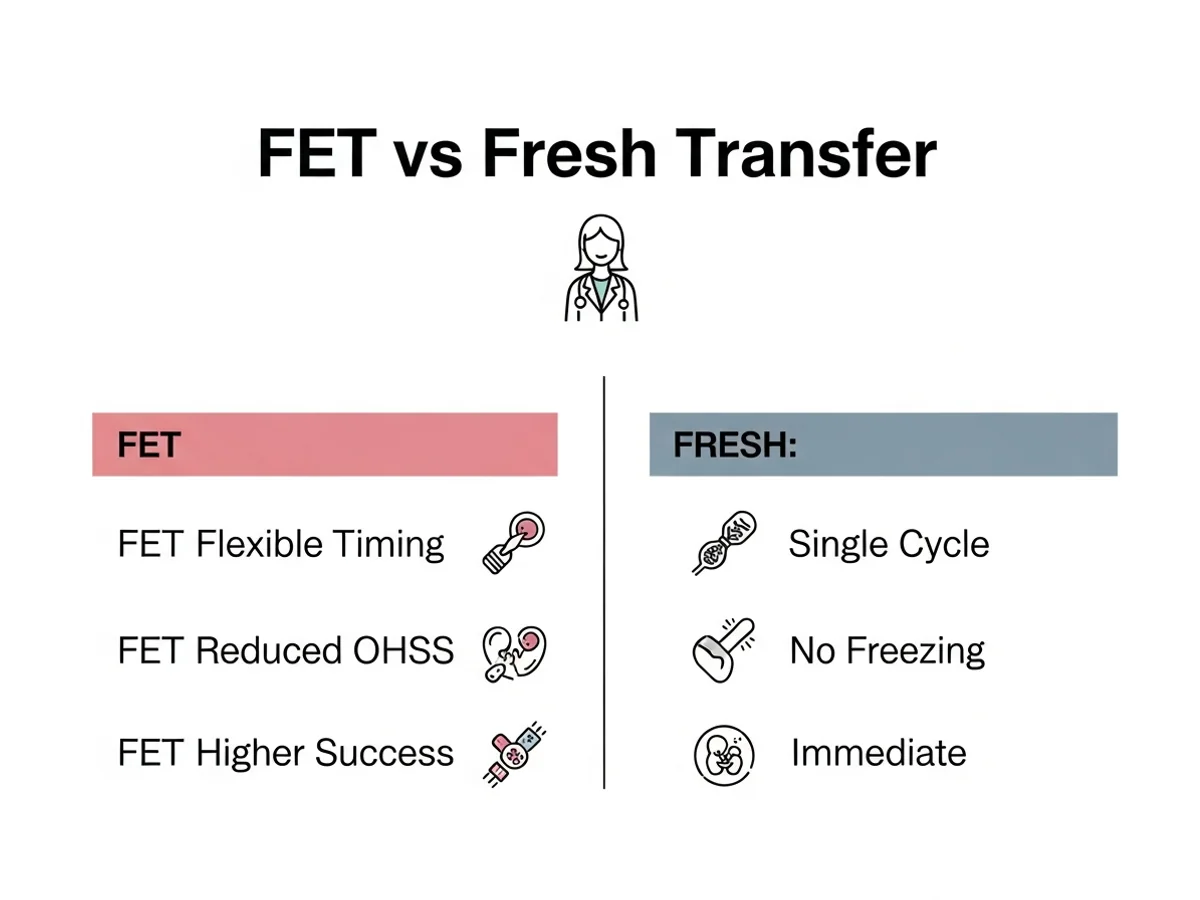
FET has become an increasingly preferred strategy in modern IVF practice. After ovarian stimulation, elevated estrogen and progesterone can sometimes reduce uterine receptivity. A freeze-all approach allows the endometrium to recover fully before transfer in a subsequent natural or medicated cycle. Dr. Rukkayal evaluates each patient individually to determine whether a fresh transfer or FET offers the best chance of implantation. For patients with surplus embryos from a previous cycle, FET provides additional attempts at pregnancy without repeating the stimulation and retrieval process — a significant physical and emotional advantage. Every frozen embryo in our programme is graded before vitrification and re-assessed after thawing, with Dr. Rukkayal confirming viability and quality before proceeding with transfer.
95%+
Post-Thaw Embryo Survival
70-75%
FET Clinical Pregnancy Rate
3000+
FET Cycles Performed
When Is FET Recommended?
You should see a specialist if you experience:
- You have cryopreserved embryos from a previous IVF cycle
- Your doctor recommended a freeze-all approach due to OHSS risk
- You are planning a second child using stored embryos
- Your endometrial lining was not optimal during the fresh cycle
- You need preimplantation genetic testing results before transfer
Vitrification: Why Modern Freezing Preserves Embryo Quality
Vitrification is a flash-freezing technique that cools embryos so rapidly that ice crystals — which can damage cell structures — never form. Instead, the embryo transitions directly into a glass-like solid state. This preserves cellular integrity far better than older slow-freezing methods. Vitrified embryos can be stored for years without quality degradation. Upon thawing, survival rates exceed 95 percent in well-equipped laboratories. This reliability is what makes freeze-all strategies and multiple transfer attempts from a single egg collection both practical and effective.
Conditions We Treat
FET Protocols & Options
Hormone-Replacement FET Cycle
Estrogen tablets or patches build the endometrial lining, followed by progesterone to create a receptive window. Transfer is timed precisely to the duration of progesterone exposure. Offers full scheduling control.
Natural Cycle FET
Embryo transfer is timed to your natural ovulation using ultrasound and LH monitoring. No additional hormones are needed. Best for patients with regular, predictable cycles.
Modified Natural Cycle FET
Your natural cycle is tracked, but a trigger injection ensures precise ovulation timing. Minimal medication with the predictability benefit of a medicated approach.
Freeze-All Strategy (Elective FET)
All embryos from a stimulation cycle are vitrified rather than transferred fresh. This approach is chosen when progesterone rises prematurely, when OHSS risk is elevated, or when endometrial conditions are suboptimal.
Why Choose Dr. Rukkayal?
- Under Dr. Rukkayal's direct supervision, the vitrification and thawing process is carefully managed, with embryo integrity confirmed before every transfer.
- Post-thaw embryo survival rates exceeding 95 percent through meticulous vitrification protocols.
- Individualised FET cycle planning — natural, modified natural, or hormone-replacement — based on your cycle regularity and endometrial response.
- Endometrial thickness and pattern assessment using serial ultrasound to confirm optimal receptivity before proceeding.
- Evidence-based timing of progesterone exposure for precise implantation window alignment.
- Convenient locations across Chennai — Kilpauk, Mylapore, Thiruvanmiyur, and Pallikaranai — plus visiting consultant at Apollo, Motherhood & Cloudnine hospitals.
Your Treatment Journey
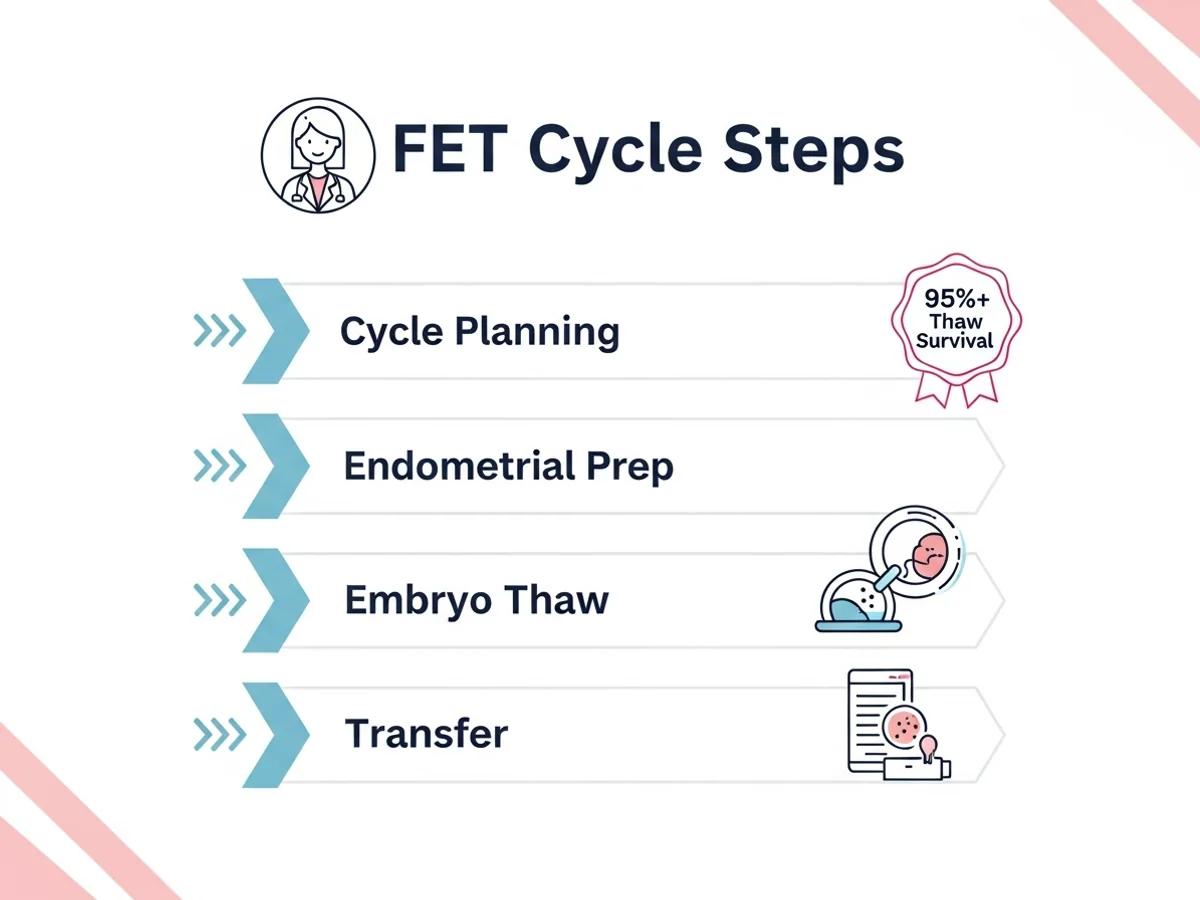
FET Cycle Planning
Dr. Rukkayal reviews your previous cycle data, embryo grades, and medical history to select the optimal FET protocol — natural cycle, modified natural, or hormone replacement.
Endometrial Preparation
Depending on the protocol, your uterine lining is prepared through natural hormonal changes or supplemental estrogen and progesterone. Serial ultrasounds confirm adequate thickness and a trilaminar pattern.
Embryo Thawing and Assessment
On the day of transfer, embryos are carefully thawed using a controlled warming protocol. Dr. Rukkayal personally assesses each embryo for cell survival, re-expansion, and morphological quality before proceeding.
Embryo Transfer
The highest-quality thawed embryo is transferred to the uterus under ultrasound guidance. The procedure is painless and takes only a few minutes. You rest briefly before heading home.
Luteal Support and Pregnancy Confirmation
Progesterone support continues through the luteal phase. A blood pregnancy test is performed 10 to 12 days after transfer, and early ultrasound follow-up is arranged upon positive results.

Have Questions About Your Treatment?
Book a consultation with Dr. Rukkayal Fathima to understand your options and next steps.
Frequently Asked Questions
In many cases, FET outcomes are equal to or better than fresh transfers. After ovarian stimulation, elevated hormone levels can reduce uterine receptivity. FET allows the endometrium to recover fully, often improving implantation rates. Large studies confirm comparable or superior pregnancy rates with FET, particularly in freeze-all strategies.
Vitrified embryos can be stored indefinitely without quality degradation. Healthy pregnancies have resulted from embryos frozen for over 10 years. The vitrification process halts all biological activity, preserving embryos at the exact developmental stage they were frozen. Storage duration does not affect success rates.
Our vitrification protocols achieve post-thaw survival rates above 95 percent. Dr. Rukkayal directly assesses each embryo after thawing, confirming full cell survival and re-expansion before transfer. In the rare event an embryo does not survive thawing, a backup embryo is thawed on the same day.
In a hormone-replacement cycle, estrogen builds the lining over 12 to 14 days, followed by progesterone to create the implantation window. In a natural cycle, your own hormones prepare the lining and transfer is timed to ovulation. Serial ultrasounds confirm a lining thickness of at least 7 to 8 millimetres with a trilaminar pattern.
Dr. Rukkayal recommends freeze-all when progesterone rises prematurely during stimulation, when OHSS risk is high, when genetic testing of embryos is planned, or when the endometrial lining is suboptimal on retrieval day. This strategy prioritises both safety and implantation success.
You can attempt as many FET cycles as you have stored embryos. Each transfer is a relatively simple procedure compared to a full IVF cycle. Dr. Rukkayal reviews and may adjust the preparation protocol between attempts based on endometrial response and implantation outcomes from previous transfers.
FET is painless and does not require anaesthesia. A thin catheter is guided through the cervix under ultrasound, and the embryo is gently deposited into the uterine cavity. The entire procedure takes two to three minutes. Most patients return to normal activities the same day with no downtime required.
If the endometrium remains thin despite estrogen supplementation, Dr. Rukkayal may add vaginal estrogen, low-dose aspirin, vitamin E, or sildenafil to improve blood flow. A natural or modified natural cycle may also be tried. Transfer is not proceeded with unless the lining meets quality criteria — protecting your frozen embryos from a suboptimal transfer.
While transferring two embryos may be considered in specific situations, Dr. Rukkayal generally recommends single embryo transfer for FET cycles, particularly with good-quality blastocysts. This approach maintains high pregnancy rates while significantly reducing the risks associated with twin pregnancies, including preterm birth and low birth weight.
Post-thaw survival rates with modern vitrification exceed 95 percent, so complete embryo loss during thawing is uncommon. If it does occur, Dr. Rukkayal will thaw a backup embryo on the same day if one is available. The situation is discussed with you before the cycle begins so you are prepared for all possible outcomes.
Related Specialties
IVF Treatment
The stimulation and retrieval process that produces the embryos used in FET cycles.
Fertility Preservation
Egg and embryo freezing for future use, utilising the same vitrification technology as FET.
ICSI Treatment
Advanced fertilisation technique that may be used to create the embryos subsequently frozen for FET.
Related Articles
Foods to Increase Endometrial Thickness — IVF Diet Guide
Thin uterine lining before IVF or FET? A fertility doctor shares the best foods, vitamins & lifestyle tips to naturally improve endometrial thickness.
2 min read
Fresh vs Frozen Embryo Transfer: Which Is Best?
Understand fresh vs frozen embryo transfer in Chennai. Learn about success rates, benefits, and which option is right for you.
10 min read
Frozen Embryo Transfer (FET) Explained
Understand frozen embryo transfer (FET) in Chennai: process, success rates, costs, and what to expect. Expert guide by Dr. Rukkayal Fathima.
14 min read
What To Do After Embryo Transfer
Comprehensive guide on what to do after embryo transfer in Chennai. Learn aftercare tips and increase your chances of success.
9 min read
Ready to Get Started?
Book a consultation with Dr. Rukkayal Fathima about your treatment options
Book AppointmentBook Consultation
Consultation Booked!
Thank you for reaching out. Our team will contact you shortly to confirm your appointment.
Need urgent help? Call us