Donor Egg IVF in Chennai
Ethical, ICMR-compliant donor egg programmes for patients with diminished ovarian reserve or repeated IVF failure

Donor egg IVF offers a path to pregnancy when a woman's own eggs are no longer viable — whether due to premature ovarian insufficiency, age-related decline, repeated IVF failure with poor embryo quality, or genetic conditions that risk transmission to offspring. At our Chennai centre, Dr. Rukkayal manages a fully ICMR-compliant anonymous donor programme with rigorous screening protocols, ensuring that donor selection, egg retrieval, fertilisation, and embryo transfer are handled with the same meticulous care as any self-cycle IVF.
The decision to use donor eggs is often emotionally complex. Dr. Rukkayal provides compassionate, non-judgmental counselling to help you understand the process, success expectations, and the genetic and legal aspects involved. All donors undergo comprehensive medical, genetic, and psychological screening as mandated by ICMR guidelines. Donor anonymity is maintained throughout. Because donor eggs come from young, healthy women, fertilisation rates and embryo quality are typically excellent — and Dr. Rukkayal personally oversees embryo culture and grading to select the highest-quality blastocysts for transfer. Recipients have their endometrium carefully prepared and monitored to ensure optimal receptivity. This structured approach yields consistently high pregnancy rates, making donor egg IVF one of the most successful fertility treatment pathways available.
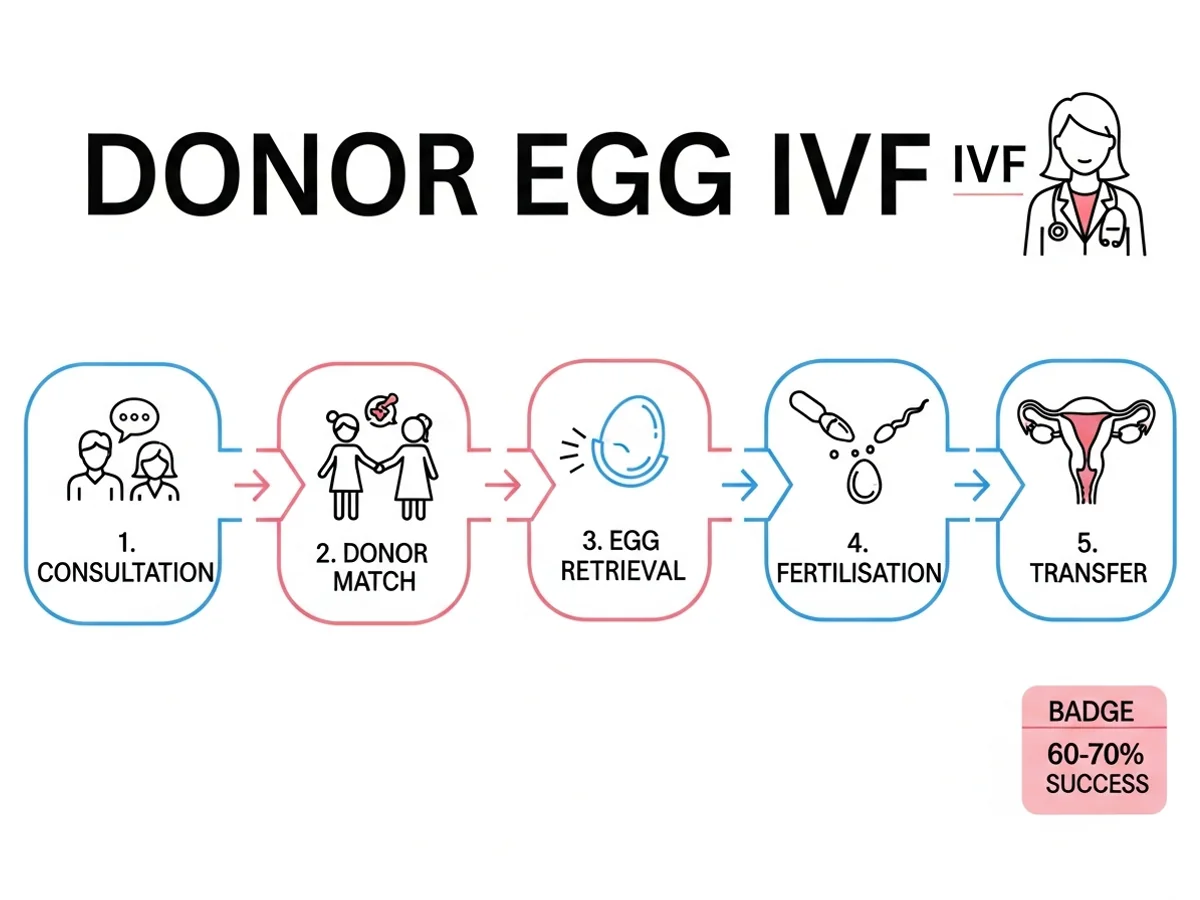
60-70%
Donor Egg Pregnancy Rate
ICMR 100%
Donor Screening Compliance
1000+
Donor Egg Cycles Completed
When Should You Consider Donor Egg IVF?
You should see a specialist if you experience:
- Very low ovarian reserve or premature ovarian insufficiency
- Multiple failed IVF cycles with your own eggs
- Genetic condition you wish to avoid passing to your child
- You are over 40 and your egg quality is a limiting factor
- Previous chemotherapy or radiation affecting your ovaries
Who Benefits from Donor Egg IVF?
Donor egg IVF is indicated when a woman cannot produce viable eggs of her own. Common indications include premature ovarian insufficiency (menopause before age 40), diminished ovarian reserve with very low AMH and antral follicle counts, repeated IVF cycles with poor egg quality or fertilisation failure, Turner syndrome or other chromosomal conditions, and the need to avoid transmitting a known genetic disorder. Because the recipient carries the pregnancy, she experiences the full gestational bond and influences fetal development through the uterine environment — a concept known as epigenetics.
Conditions We Treat
How Donor Egg IVF Works
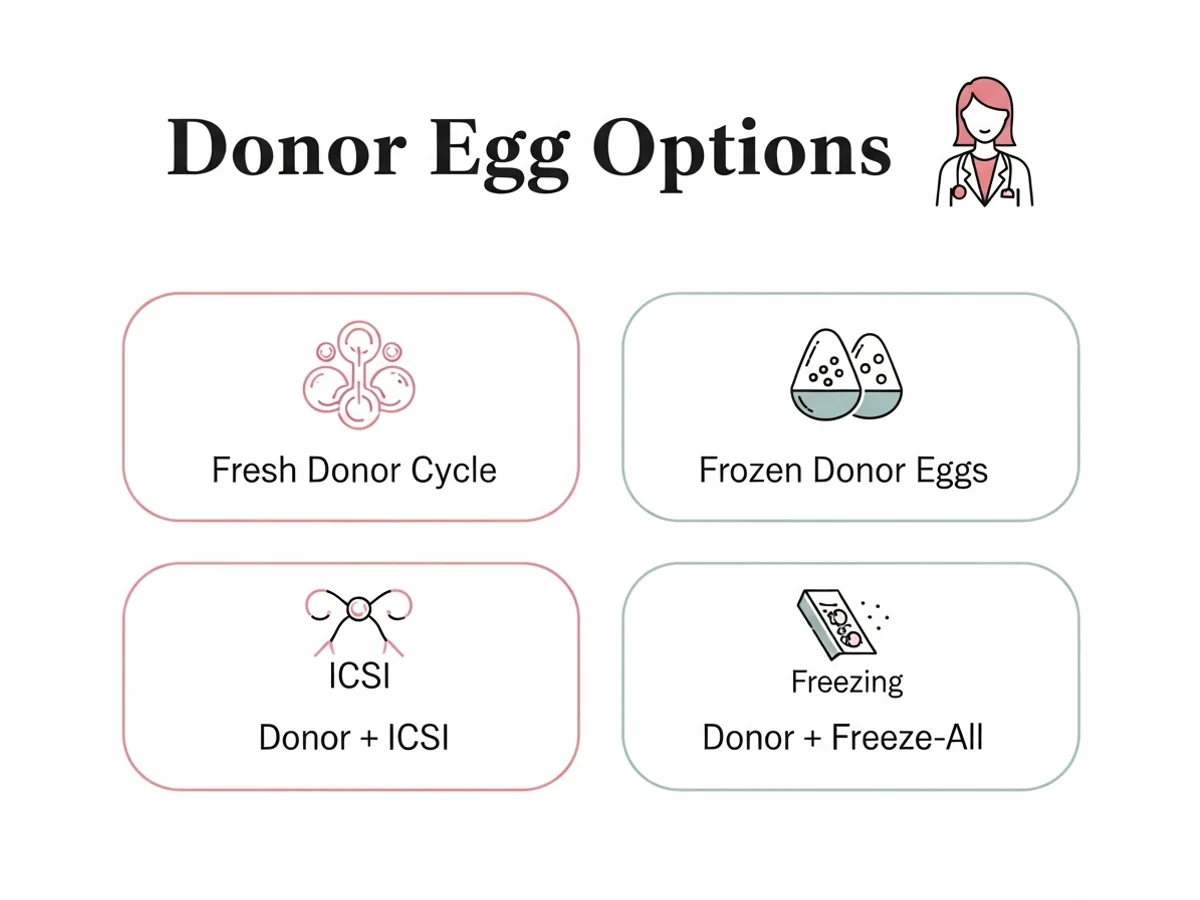
Fresh Donor Egg Cycle
The donor's stimulation cycle is synchronised with the recipient's endometrial preparation. Eggs are retrieved from the donor, fertilised with the partner's sperm via IVF or ICSI, and transferred fresh to the recipient.
Frozen Donor Egg Cycle
Vitrified donor eggs from a screened donor bank are thawed, fertilised, and transferred. This approach offers more scheduling flexibility and eliminates the need for cycle synchronisation.
Donor Egg with ICSI
When the male partner has suboptimal sperm parameters, ICSI is used to fertilise donor eggs. Dr. Rukkayal directly selects sperm under magnification for each egg, maximising fertilisation rates.
Donor Egg with Freeze-All
All embryos created from donor eggs are vitrified, and the recipient undergoes FET in a subsequent cycle. This allows time for preimplantation genetic testing or optimal endometrial preparation.
Why Choose Dr. Rukkayal?
- Fully ICMR-compliant anonymous donor programme with comprehensive medical, genetic, and psychological screening of all donors.
- With her direct involvement, Dr. Rukkayal oversees fertilisation and embryo grading of donor egg cycles, applying the same lab expertise as self-cycle IVF.
- Compassionate counselling to help you navigate the emotional, genetic, and legal dimensions of donor egg treatment.
- Donor matching based on physical characteristics, blood group, and medical compatibility.
- High pregnancy rates — typically exceeding 60 to 70 percent per transfer — owing to young donor eggs and meticulous embryo selection.
- Convenient locations across Chennai — Kilpauk, Mylapore, Thiruvanmiyur, and Pallikaranai — plus visiting consultant at Apollo, Motherhood & Cloudnine hospitals.
Your Treatment Journey
Consultation and Counselling
Dr. Rukkayal discusses your medical history, explains why donor eggs are recommended, and addresses emotional, ethical, and legal aspects. You receive detailed information about the donor screening process and ICMR regulations.
Donor Selection and Screening
An anonymous donor is selected based on physical and blood group compatibility. The donor undergoes comprehensive screening including infectious disease testing, genetic carrier screening, hormonal evaluation, and psychological assessment.
Recipient Endometrial Preparation
Estrogen supplementation builds your uterine lining while the donor undergoes ovarian stimulation (in fresh cycles) or independently in frozen egg cycles. Serial ultrasounds confirm optimal endometrial thickness and pattern.
Egg Retrieval and Fertilisation
Donor eggs are retrieved and fertilised with your partner's sperm using IVF or ICSI. Dr. Rukkayal personally oversees fertilisation assessment and embryo culture over the following three to five days.
Embryo Transfer
The highest-grade blastocyst is transferred to your prepared uterus under ultrasound guidance. Surplus quality embryos are vitrified for future attempts.
Pregnancy Support and Confirmation
Progesterone and estrogen support continue through early pregnancy. A blood pregnancy test is performed 10 to 12 days after transfer, with early ultrasound follow-up to confirm viability.

Have Questions About Your Treatment?
Book a consultation with Dr. Rukkayal Fathima to understand your options and next steps.
Frequently Asked Questions
Donor egg IVF is recommended for women with premature ovarian insufficiency, very low ovarian reserve (AMH below 0.5 with minimal antral follicles), repeated IVF failures due to poor egg quality, women over 42 to 43 where own-egg success rates are very low, Turner syndrome, or carriers of serious genetic conditions they wish to avoid passing on.
Yes. Our programme follows all ICMR (Indian Council of Medical Research) guidelines strictly. Donor identity remains anonymous to the recipient and vice versa. All legal documentation is completed before the cycle begins. Donors provide informed consent and undergo mandatory screening as per regulatory requirements.
Donors undergo comprehensive screening including complete blood count, infectious disease panel (HIV, hepatitis B and C, syphilis), genetic carrier screening, hormonal evaluation, psychological assessment, and family history review. Only donors aged 21 to 35 who meet all medical and psychological criteria are accepted into the programme.
The baby will carry the donor's and your partner's genetic material. However, as the gestational carrier, you influence your baby's gene expression through epigenetics — the uterine environment, nutrition, and hormonal signals you provide during pregnancy affect which genes are activated. You carry, deliver, and bond with your child from conception.
Donor egg IVF typically achieves pregnancy rates of 60 to 70 percent per transfer — significantly higher than own-egg IVF for women with diminished reserve. This is because donor eggs come from young, healthy women with optimal egg quality. Dr. Rukkayal's direct involvement in embryo grading further optimises selection.
Yes. While donor identity remains anonymous, you can specify preferences for physical traits such as height, complexion, hair type, and build. Blood group matching is standard. The team works to match donor characteristics with your preferences as closely as possible within the available donor pool.
From donor selection to embryo transfer, a fresh donor egg cycle takes approximately four to six weeks. Frozen donor egg cycles can be faster since donor stimulation is already complete. Endometrial preparation typically requires 14 to 18 days of estrogen supplementation before progesterone is started and transfer is scheduled.
If surplus embryos were vitrified, a frozen embryo transfer can be attempted in a subsequent cycle without repeating the donor egg retrieval. Dr. Rukkayal reviews the endometrial preparation, transfer technique, and embryo quality from the first attempt and adjusts the protocol accordingly for the next transfer.
Children born through egg donation often share physical traits with their birth mother due to epigenetic influences — the uterine environment you provide during pregnancy can affect gene expression in meaningful ways. Additionally, donors are typically matched for physical characteristics such as complexion, build, and hair type. While the genetic material comes from the donor and your partner, many families find the resemblance closer than expected.
There is no strict biological age limit for receiving donor eggs, as the uterus can typically sustain a pregnancy well beyond the age at which egg quality declines. In practice, most clinics evaluate recipients individually, considering overall health, cardiovascular fitness, and obstetric risk factors. Women in their mid-40s and even early 50s have successfully carried pregnancies with donor eggs, though Dr. Rukkayal ensures a thorough medical assessment to confirm that pregnancy is safe for each patient.
Related Specialties
IVF Treatment
The foundational IVF process that underlies donor egg treatment, from fertilisation through embryo transfer.
Female Fertility
Comprehensive evaluation to determine whether own-egg treatment or donor eggs offer the best chance of success.
Fertility Preservation
Egg and embryo freezing options for women who wish to preserve fertility before ovarian reserve declines.
Related Articles
How Many Eggs Can a Woman Donate? Limits & Rules
How many eggs can a woman donate in India? Dr. Rukkayal Fathima, fertility specialist in Chennai, explains ICMR/ART Act limits, eligibility and risks.
7 min read
How to Increase AMH Level Naturally
How to increase AMH levels naturally — Chennai fertility specialist Dr. Rukkayal explains evidence-based diet, supplements & lifestyle changes that help.
8 min read
Age-Related Fertility Decline: Causes, Tests & Treatment Options
How age affects fertility in women and men. Dr. Rukkayal explains ovarian reserve, egg quality, AMH testing, and treatment options in Chennai.
11 min read
AMH Levels Explained
Understand AMH levels & fertility. Expert insights from Dr. Rukkayal Fathima, Chennai's leading fertility specialist.
7 min read
Donor Egg IVF: Is It Right For You?
Comprehensive guide to donor egg IVF in Chennai. Understand the process, success rates, and costs. Consult Dr. Rukkayal Fathima.
12 min read
Low Ovarian Reserve Treatment Options
Low ovarian reserve does not mean the end of the road. Dr. Rukkayal explains the tests, treatment options, and IVF protocols available in Chennai.
12 min read
Ready to Get Started?
Book a consultation with Dr. Rukkayal Fathima about your treatment options
Book AppointmentBook Consultation
Consultation Booked!
Thank you for reaching out. Our team will contact you shortly to confirm your appointment.
Need urgent help? Call us