IVF Treatment in Chennai
Personalised IVF protocols with direct embryologist-led lab expertise — built on 12+ years of clinical practice and 3000+ treated couples.
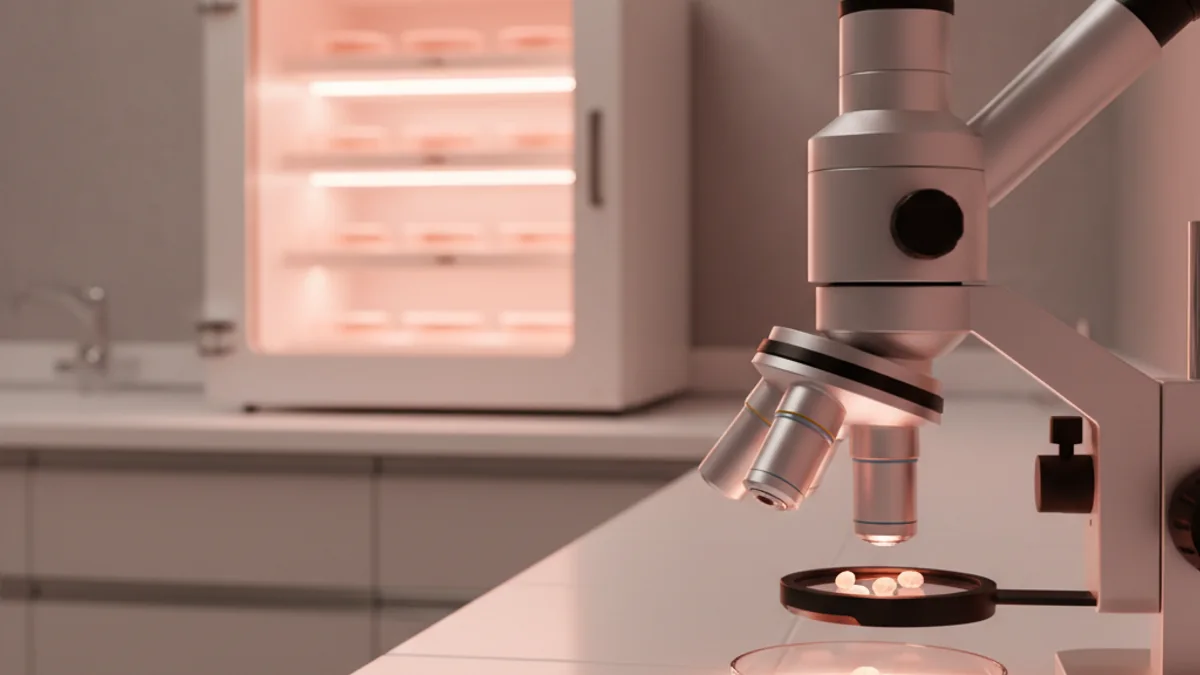
In vitro fertilisation (IVF) remains the most effective assisted reproductive technology for couples who have not conceived through simpler treatments. At our Chennai fertility centre, Dr. Rukkayal combines clinical expertise with hands-on embryology lab involvement — personally overseeing embryo culture, grading, and selection — to give every cycle the strongest possible foundation.
Unlike most fertility specialists who rely entirely on a separate embryology team, Dr. Rukkayal brings direct IVF lab training from Germany and the UK into every treatment cycle. She evaluates each embryo under magnification, selects the highest-grade blastocysts, and tailors stimulation protocols to your ovarian reserve and response pattern. This dual-expertise approach — clinician and embryologist in one — reduces miscommunication between departments and allows real-time adjustments that can meaningfully improve outcomes. Whether you are exploring IVF after failed IUI cycles, dealing with endometriosis or tubal factor infertility, or pursuing treatment after 35, every protocol is built around your unique biology rather than a one-size-fits-all template. Patients receive transparent guidance at every stage, from baseline scans through embryo transfer and the two-week wait, so you always understand what is happening and why.
60%
Clinical Pregnancy Rate (select cases)
65%
Blastocyst Formation Rate
3000+
Patients Treated
12+
Years of Experience
When Should You Consider IVF?
You should see a specialist if you experience:
- You have been trying to conceive for over a year without success
- You have been diagnosed with blocked or damaged fallopian tubes
- Previous IUI cycles have not resulted in pregnancy
- Your partner has moderate to severe male factor infertility
- You have unexplained infertility despite normal test results
- You are over 35 and have not conceived after six months of trying
How IVF Works: A Patient-Friendly Overview
IVF involves stimulating the ovaries to produce multiple mature eggs, retrieving those eggs in a short procedure under sedation, fertilising them with sperm in a controlled laboratory environment, culturing the resulting embryos for three to five days, and transferring the best-quality embryo into the uterus. Embryo quality — determined by cell division rate, symmetry, and fragmentation — is the single biggest controllable factor in IVF success. Every embryo is graded by Dr. Rukkayal herself using internationally standardised criteria, ensuring only the most viable embryos are selected for transfer or vitrification.
Conditions We Treat
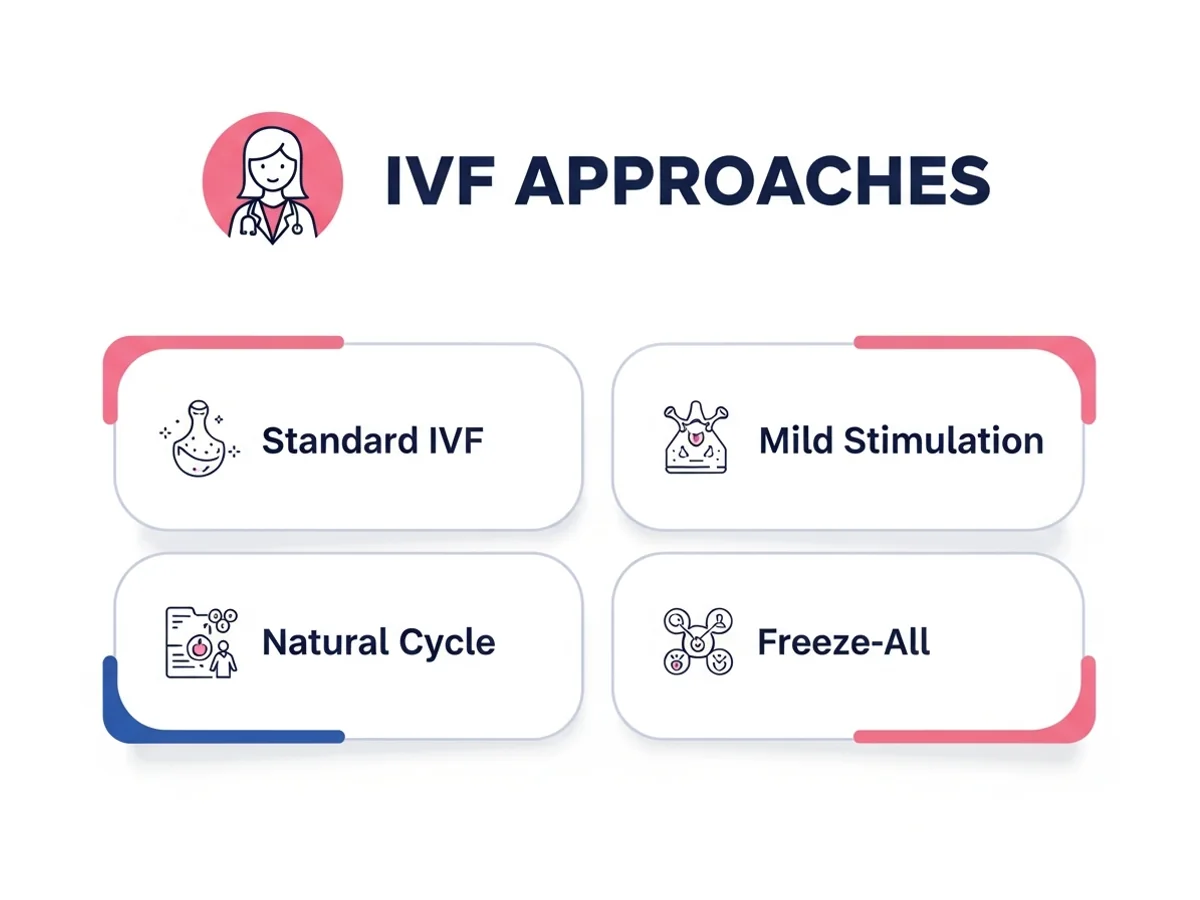
IVF Treatment Protocols We Offer
Standard IVF Protocol
Controlled ovarian stimulation using gonadotropins, followed by egg retrieval, fertilisation, and fresh or frozen embryo transfer. Best suited for patients with adequate ovarian reserve.
Mild Stimulation IVF
Lower-dose medication protocols that produce fewer but often higher-quality eggs. Ideal for patients who prefer a gentler approach or those with a history of ovarian hyperstimulation.
Natural Cycle IVF
No or minimal stimulation medications — works with your body's single naturally selected egg. Suitable for patients with low ovarian reserve who do not respond well to stimulation.
Freeze-All Strategy
All quality embryos are vitrified rather than transferred in the stimulation cycle. The uterine lining recovers fully before a frozen embryo transfer, which can improve implantation rates.
Blastocyst Culture and Transfer
Embryos are cultured to day five or six blastocyst stage before transfer. Extended culture helps identify embryos with the highest developmental potential, improving single-embryo transfer success.
Why Choose Dr. Rukkayal?
- Dr. Rukkayal personally selects and grades embryos in the lab — a rare dual skill set that bridges clinic and laboratory decisions.
- Individualised stimulation protocols based on AMH, antral follicle count, and previous response history rather than standardised templates.
- Strong success rates driven by meticulous embryo culture practices, evidence-based transfer timing, and individually optimised protocols.
- Single embryo transfer policy where clinically appropriate, reducing multiple pregnancy risks without compromising success.
- Transparent step-by-step communication — you receive updates at every milestone from follicle growth through embryo development.
- International training from the UK (MRCOG) and Germany (FRM) applied to every treatment decision.
- Convenient locations across Chennai — Kilpauk, Mylapore, Thiruvanmiyur, and Pallikaranai — plus visiting consultant at Apollo, Motherhood & Cloudnine hospitals.
Your Treatment Journey
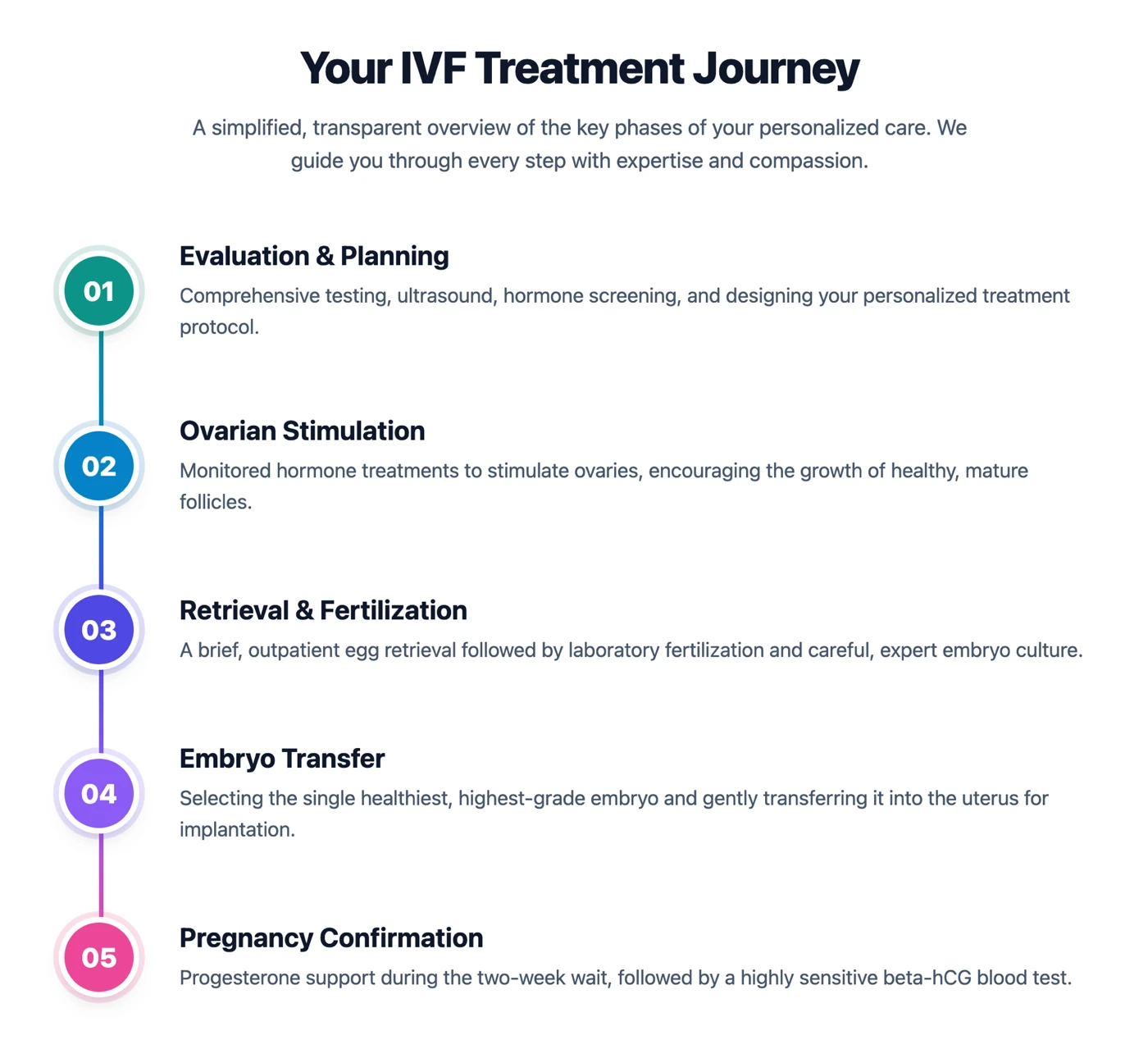
Initial Fertility Assessment
Comprehensive evaluation including hormonal panels, ultrasound assessment of ovarian reserve, tubal patency testing, and semen analysis. Dr. Rukkayal reviews all results personally to design your protocol.
Protocol Design and Counselling
A detailed discussion of your customised stimulation protocol, expected timeline, medication schedule, and what to expect at each stage. All questions are addressed before treatment begins.
Ovarian Stimulation and Monitoring
Daily or alternate-day injectable medications for 8 to 12 days, with regular ultrasound and blood work to track follicle growth and adjust doses in real time.
Egg Retrieval
A 15 to 20-minute ultrasound-guided procedure under light sedation. Mature eggs are immediately transferred to the adjacent lab for preparation.
Fertilisation and Embryo Culture
Eggs are fertilised using standard IVF or ICSI depending on sperm parameters. Dr. Rukkayal directly monitors embryo development over the next three to five days, grading each embryo at key checkpoints.
Embryo Transfer
The highest-grade embryo is transferred to the uterus in a painless, ultrasound-guided procedure. Surplus quality embryos are vitrified for future use.
Luteal Support and Pregnancy Test
Progesterone support maintains the uterine lining during the two-week wait. A blood beta-hCG test confirms pregnancy, and early ultrasound follow-up is scheduled promptly.

Have Questions About Your Treatment?
Book a consultation with Dr. Rukkayal Fathima to understand your options and next steps.
Frequently Asked Questions
IVF is an assisted reproduction technique where eggs and sperm are combined in a laboratory, and the resulting embryo is placed in the uterus. It is recommended when both fallopian tubes are blocked, sperm counts are very low, endometriosis is advanced, ovulation disorders have not responded to simpler treatments, or the cause of infertility remains unexplained after standard workup.
Dr. Rukkayal evaluates each embryo under magnification herself, selecting the highest-grade blastocysts for transfer. This hands-on involvement removes the communication gap between clinician and embryologist, allowing real-time decisions about culture duration, transfer timing, and freeze strategies that are fully aligned with your clinical picture.
Success rates vary by individual factors including age, ovarian reserve, embryo quality, and uterine receptivity. For women under 35 with good-quality blastocysts, clinical pregnancy rates can reach 60 percent per transfer. During your consultation, Dr. Rukkayal provides a realistic estimate based on your specific test results rather than quoting generalised statistics.
A single IVF cycle typically spans four to six weeks. Ovarian stimulation takes 8 to 12 days, egg retrieval occurs two days after the trigger injection, embryo transfer happens three to five days later, and the pregnancy blood test is performed 12 to 14 days after transfer.
Most patients describe the daily injections as mild discomfort similar to an insulin pen. Egg retrieval is performed under light sedation, so you feel no pain during the procedure. Embryo transfer is painless and does not require anaesthesia. Mild bloating or cramping during stimulation is common and manageable.
We follow a single embryo transfer policy wherever clinically appropriate, especially for patients under 35 with good-quality blastocysts. This approach maintains high success rates while significantly reducing the risk of twin or triplet pregnancies. Transfer of two embryos may be considered in specific clinical situations after thorough discussion.
Surplus good-quality embryos are vitrified — an advanced flash-freezing technique — and stored for future use. Frozen embryos maintain their quality for years and can be used in subsequent transfer cycles without repeating the stimulation and retrieval process, giving you additional opportunities from a single egg collection.
Dr. Rukkayal conducts a detailed cycle review, examining stimulation response, egg quality, fertilisation rates, and embryo development. Based on these findings, the protocol is modified — adjusting medication doses, adding adjunct therapies, or changing the transfer strategy — before proceeding with the next cycle.
Age is the most significant factor. Women under 35 have the highest success rates. Between 35 and 40, success gradually declines as egg quality decreases. Beyond 40, success rates drop more sharply, and donor egg IVF may be discussed. Early evaluation and timely treatment give you the best chance regardless of age.
Yes. Dr. Rukkayal designs modified stimulation protocols — including mild stimulation and natural cycle IVF — specifically for low responders. The focus shifts to egg quality rather than quantity. Supplements, priming strategies, and optimised embryo culture can still yield viable pregnancies even when fewer eggs are retrieved.
Stop smoking and limit alcohol at least three months before treatment. Maintain a balanced diet rich in protein, folate, and antioxidants. Moderate exercise is encouraged, but avoid intense training during stimulation. Adequate sleep and stress management also support better hormonal balance and egg quality.
IUI places washed sperm directly into the uterus and relies on natural fertilisation in the fallopian tube. IVF bypasses the tubes entirely — eggs are fertilised in the lab, and embryos are transferred to the uterus. IVF offers significantly higher success rates per cycle, especially when tubal, male factor, or unexplained infertility is involved.
IVF costs in Chennai typically range from Rs 1.25 lakh to Rs 3 lakh per cycle, depending on the stimulation protocol, whether ICSI is required, and whether frozen embryo transfer is involved. Medication costs, diagnostic tests, and any additional procedures like blastocyst culture or embryo freezing may add to the total. Dr. Rukkayal provides a detailed cost breakdown during your initial consultation so there are no surprises. The focus is on making fertility treatment accessible without compromising on laboratory standards or clinical care.
Related Specialties
ICSI Treatment
Advanced sperm injection technique used alongside IVF when sperm parameters are suboptimal.
Frozen Embryo Transfer
Transfer of previously vitrified embryos in a hormonally prepared cycle for improved implantation.
Female Fertility
Comprehensive evaluation and treatment of ovulatory, tubal, and uterine causes of female infertility.
Male Fertility
Diagnosis and management of male factor infertility including low sperm count and motility issues.
IUI Treatment
Less invasive insemination option — often the first step before IVF for mild fertility issues.
Donor Egg IVF
Donor egg IVF for women with diminished ovarian reserve or repeated IVF failure.
Related Articles
IVF Cost in Chennai (2026): Full Breakdown
IVF cost in Chennai (2026): detailed breakdown of cycle pricing, medications, ICSI add-ons, and affordable options by Dr. Rukkayal Fathima.
9 min read
Test Tube Baby Cost in Chennai: 2026 Pricing Guide
What does a test tube baby (IVF) cost in Chennai in 2026? Dr. Rukkayal breaks down cycle pricing, medication costs, and factors affecting the total price.
11 min read
Test Tube Baby Success Rate
What is a realistic test tube baby (IVF) success rate? Dr. Rukkayal explains how age and other factors shape your real chances in Chennai.
11 min read
What To Do After Embryo Transfer
Comprehensive guide on what to do after embryo transfer in Chennai. Learn aftercare tips and increase your chances of success.
9 min read
IVF vs Test Tube Baby: Are They The Same?
Confused about IVF vs Test Tube Baby? Dr. Rukkayal in Chennai clarifies the truth about IVF and fertility treatment options.
9 min read
Embryo Grading Explained
Understand embryo grading in IVF at Chennai clinics. Learn about the grading system and its impact on success.
10 min read
IVF Cycle: What to Expect
Your guide to understanding the IVF cycle in Chennai. Learn the timeline, side effects, costs, and how to prepare for your first IVF.
9 min read
How Many IVF Cycles Are Needed?
Understand the average number of IVF cycles needed for success in Chennai. Dr. Rukkayal explains factors & success rates.
8 min read
Explore more articles(36)
- IVF Failure: Common Reasons & Next Steps
- IVF Stimulation Protocol: What to Expect
- IVF Step by Step in Chennai: The Full Process
- IVF Success Rate in Chennai: By Age & Factors
- IVF or IUI: Which Treatment Is Right?
- Mini IVF vs Conventional IVF: Which Is Best?
- Who Should Consider IVF? Is It Right for You?
- 4AA Embryo Success Rate: Clinical Answer
- Evaparin Injection Uses in IVF
- Intercourse After Egg Retrieval: When Is It Safe?
- No Period After Egg Retrieval: When to Expect It
- Loose Motion After Embryo Transfer
- Delayed Period After IVF?
- Fertility Treatment Options: From Trying Naturally to IUI & IVF — Complete Guide
- Fertility Treatment Cost in Chennai
- ICSI Cost in Chennai: What to Expect
- Surrogacy Rules & Laws
- Are IVF Babies Healthy? Facts & Reassurance for Parents
- Do You Need IVF? Understanding Your Fertility Path
- Your First IVF Consultation: What to Expect
- Is Infertility Curable? Modern Fertility Solutions
- Is IVF Painful? Understanding Discomfort & Relief
- Is IVF Safe? Understanding Risks & Reassurance
- IVF Age Limit in India: What You Need to Know
- IVF Myths Debunked: Facts for Your Fertility Journey
- IVF Success Rate by Age: Your Chances in Chennai
- Essential Questions for Your Fertility Doctor
- What is IVF? Your Simple Guide to Fertility Treatment
- What is a Test Tube Baby? Demystifying IVF in Chennai
- Embryo Arrest: Why Development Stops
- ERA Test: Is It Right for You?
- Implantation Symptoms: What's Normal?
- IVF Twins: Chances & Risks
- How Many Eggs Can a Woman Donate? Limits & Rules
- Donor Egg IVF: Is It Right For You?
- ICSI Recommendations: Who Needs It?
Ready to Get Started?
Book a consultation with Dr. Rukkayal Fathima about your treatment options
Book AppointmentBook Consultation
Consultation Booked!
Thank you for reaching out. Our team will contact you shortly to confirm your appointment.
Need urgent help? Call us