Male Infertility Treatment in Chennai
Comprehensive evaluation and targeted treatment for male factor infertility — from semen analysis to advanced sperm retrieval and ICSI, all under one roof.

Male factor infertility contributes to approximately 40 to 50 percent of all couples experiencing difficulty conceiving, yet it is often the last thing investigated. Many men are surprised to learn that a semen analysis should be one of the first tests performed during a fertility evaluation — it is simple, non-invasive, and can immediately clarify whether the male partner is a contributing factor. At our Chennai clinic, Dr. Rukkayal provides a thorough, respectful evaluation of male fertility that goes beyond a basic semen report to identify the specific cause and the most effective treatment.
Male infertility encompasses a wide range of conditions — from low sperm count and poor motility to complete absence of sperm in the ejaculate (azoospermia). The causes can be hormonal, genetic, anatomical, infectious, or lifestyle-related, and frequently more than one factor is present. Dr. Rukkayal's approach integrates advanced semen analysis, hormonal profiling, genetic testing, and imaging to build a complete diagnostic picture. When assisted reproduction is needed, her direct involvement in the IVF and ICSI laboratory is a distinct advantage: she understands not just how to prescribe treatment but how individual sperm characteristics affect fertilization outcomes in the laboratory. For men with severe oligospermia or azoospermia, she coordinates with urologists for surgical sperm retrieval procedures such as TESA or micro-TESE, ensuring seamless coordination between the surgical and laboratory teams. The goal is always to identify the least invasive path that gives the couple the best chance of success.

5000+
Male Patients Evaluated
65-75%
Treatment Success Rate
Signs That May Indicate Male Infertility
You should see a specialist if you experience:
- Inability to conceive after 12 months of regular unprotected intercourse
- Known history of testicular injury, surgery, or undescended testes
- Low libido or erectile difficulties
- Pain, swelling, or lumps in the testicular area
- History of sexually transmitted infections or urinary tract infections
- Previous use of anabolic steroids or testosterone supplements
- Family history of infertility or genetic conditions
Understanding Male Infertility
Male infertility is far more common than most people assume. Studies consistently show that male factor is the sole cause in approximately 20 to 30 percent of infertile couples and a contributing factor in another 20 percent. Despite these numbers, there remains a significant stigma and lack of awareness around male reproductive health, which often delays diagnosis and treatment. Sperm production is a complex process influenced by hormonal signals from the brain, testicular function, and the integrity of the reproductive tract. Any disruption — whether from a varicocele (enlarged veins in the scrotum), hormonal deficiency, genetic condition, infection, obstruction, or lifestyle factor — can reduce sperm count, motility, or morphology to levels that impair fertility. The encouraging reality is that most causes of male infertility are treatable. Lifestyle modifications, hormonal therapy, surgical correction, and assisted reproductive techniques like IUI, IVF, and ICSI have transformed outcomes for men who were previously told they could not father children.
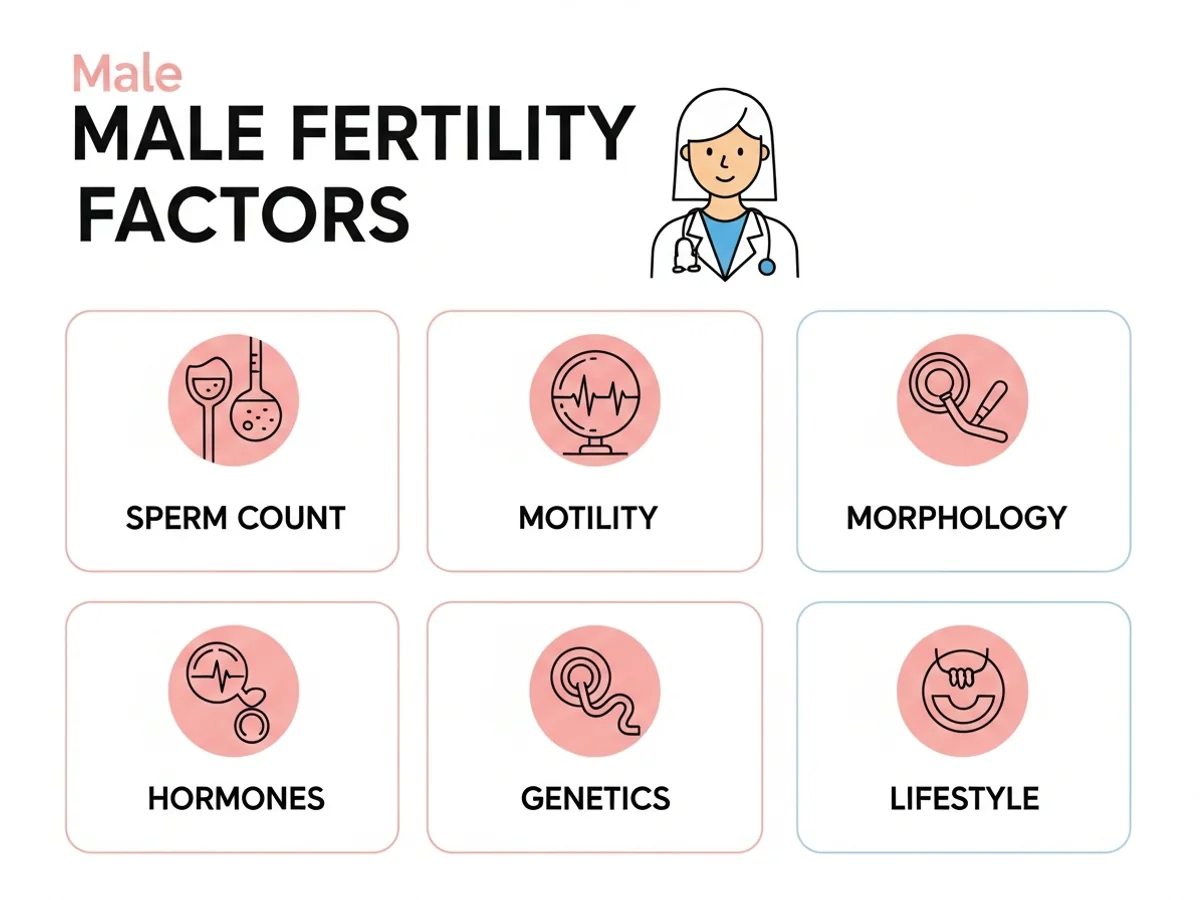
Common Causes of Male Infertility
Low Sperm Count (Oligospermia)
A concentration below 15 million sperm per milliliter reduces the probability of natural fertilization. Severity ranges from mild to severe, with treatment options varying accordingly.
Poor Sperm Motility (Asthenospermia)
Sperm that cannot swim effectively are unable to reach and penetrate the egg. Progressive motility below 32 percent is considered suboptimal.
Abnormal Sperm Morphology (Teratospermia)
A high percentage of abnormally shaped sperm can reduce fertilization capacity. Strict morphology criteria (Kruger) help identify this issue.
Varicocele
Enlarged veins in the scrotum raise testicular temperature and impair sperm production. It is the most common surgically correctable cause of male infertility.
Azoospermia (No Sperm in Ejaculate)
Complete absence of sperm may be obstructive (a blockage in the reproductive tract) or non-obstructive (a production problem). Each type requires a different treatment approach.
Hormonal Imbalances
Low testosterone, elevated prolactin, or thyroid dysfunction can impair the hormonal cascade needed for normal sperm production.
Genetic Factors
Y-chromosome microdeletions, Klinefelter syndrome, and CFTR gene mutations (linked to congenital absence of the vas deferens) are important genetic causes.
Infections and Inflammation
Past or present infections of the reproductive tract — including epididymitis, orchitis, or sexually transmitted infections — can damage sperm-producing tissue or cause obstruction.
Obstructive Causes
Blockages in the vas deferens, ejaculatory ducts, or epididymis prevent sperm from reaching the ejaculate. Prior vasectomy, infection, or congenital absence may be responsible.
Lifestyle and Environmental Factors
Excessive heat exposure, smoking, heavy alcohol use, anabolic steroid use, obesity, and certain medications can all negatively impact sperm parameters.
How We Diagnose Male Infertility
Comprehensive Semen Analysis
Evaluation of sperm count, motility, morphology, volume, pH, and white blood cell count — the cornerstone of male fertility assessment. Two samples are typically analyzed for accuracy.
Hormonal Panel
Blood tests for FSH, LH, testosterone, prolactin, and thyroid hormones to evaluate the hormonal regulation of sperm production.
Scrotal Ultrasound
Imaging to detect varicocele, testicular abnormalities, epididymal cysts, or obstructive lesions that may be impairing fertility.
Sperm DNA Fragmentation Test
Measures the integrity of genetic material within sperm. High fragmentation is associated with poor embryo development, implantation failure, and recurrent miscarriage.
Genetic Testing
Karyotyping, Y-chromosome microdeletion analysis, and CFTR gene testing for men with severe oligospermia or azoospermia to identify genetic causes and guide counselling.
Post-Ejaculation Urinalysis
Detects retrograde ejaculation — a condition where semen enters the bladder instead of exiting through the urethra — in men with low ejaculate volume.
Transrectal Ultrasound
Used when ejaculatory duct obstruction is suspected, to visualize the seminal vesicles and ejaculatory ducts.
Testicular Biopsy (When Indicated)
In cases of non-obstructive azoospermia, a biopsy can determine whether sperm production is occurring at any level within the testes.
Conditions We Treat
How We Approach Male Fertility
Lifestyle Optimization and Supplements
Evidence-based dietary changes, exercise guidance, smoking and alcohol cessation, antioxidant supplementation, and elimination of heat exposure to improve sperm parameters naturally.
Hormonal Therapy
Correction of hormonal imbalances with medications that stimulate the pituitary-gonadal axis, restore testosterone levels, or address elevated prolactin — improving sperm production over 3 to 6 months.
Varicocele Repair
Surgical correction of varicocele — typically via microsurgical or laparoscopic approach — to reduce testicular temperature and improve sperm count and motility.
Intrauterine Insemination (IUI)
For mild male factor infertility, processed and concentrated sperm are placed directly in the uterus to increase the number of sperm reaching the egg.
IVF with ICSI
Intracytoplasmic sperm injection — where a single sperm is directly injected into each egg — is the treatment of choice for moderate to severe male factor infertility. Dr. Rukkayal's direct lab involvement ensures optimal sperm selection.
Surgical Sperm Retrieval (TESA / Micro-TESE)
For men with azoospermia, sperm can often be retrieved directly from the testes or epididymis and used for ICSI, enabling biological fatherhood even when no sperm is present in the ejaculate.
Why Choose Dr. Rukkayal?
- Direct IVF and ICSI laboratory expertise — Dr. Rukkayal's hands-on lab background means she understands how sperm characteristics affect fertilization outcomes, guiding treatment with laboratory-informed decisions.
- Comprehensive male fertility workup that goes beyond a basic semen report to include DNA fragmentation, hormonal, and genetic evaluation.
- Seamless coordination with urologists for varicocele repair and surgical sperm retrieval, ensuring continuity from diagnosis through to IVF.
- International training (MRCOG UK, FRM Germany) with exposure to the latest evidence-based male infertility management protocols.
- Respectful, stigma-free environment where male partners feel comfortable discussing reproductive health openly.
- Couple-centered approach that evaluates and treats both partners together for the best overall outcome.
- Convenient locations across Chennai — Kilpauk, Mylapore, Thiruvanmiyur, and Pallikaranai — plus visiting consultant at Apollo, Motherhood & Cloudnine hospitals.
Your Treatment Journey
Initial Semen Analysis and Consultation
A comprehensive semen analysis is performed, and Dr. Rukkayal reviews the results with you and your partner, explaining each parameter and what it means for your fertility.
Advanced Diagnostics
Based on the semen analysis findings, additional tests — hormonal panel, scrotal ultrasound, DNA fragmentation, or genetic testing — are ordered to pinpoint the underlying cause.
Diagnosis and Treatment Discussion
All results are reviewed together. Dr. Rukkayal explains the diagnosis, presents all treatment options, and helps you and your partner decide on the most appropriate path forward.
Treatment Initiation
Whether treatment involves lifestyle changes, medication, surgical correction, IUI, or IVF with ICSI, it begins promptly with clear expectations about timelines and milestones.
Monitoring and Adjustment
Repeat semen analyses and clinical follow-ups track your response to treatment. Protocols are adjusted as needed to optimize sperm parameters or ART outcomes.
Conception and Follow-Through
Once conception is achieved — whether naturally or through assisted reproduction — early pregnancy monitoring confirms a healthy outcome, bringing the journey full circle.
Have Questions About Your Treatment?
Book a consultation with Dr. Rukkayal Fathima to understand your options and next steps.
Frequently Asked Questions
Male factor contributes to approximately 40 to 50 percent of all infertility cases. It is the sole cause in about 20 to 30 percent of couples and a contributing factor alongside female issues in another 20 percent. A semen analysis should always be part of the initial fertility workup.
Yes. Quitting smoking, reducing alcohol, maintaining a healthy weight, avoiding excessive heat (saunas, laptops on the lap), and taking antioxidant supplements have been shown to improve sperm count, motility, and DNA integrity. Sperm take approximately 74 days to develop, so improvements are typically seen after 3 months of consistent changes.
Obstructive azoospermia means sperm are being produced but cannot reach the ejaculate due to a blockage (often very treatable with surgical repair or sperm retrieval). Non-obstructive azoospermia means the testes are producing little or no sperm, which requires micro-TESE to find usable sperm for ICSI.
Not always. Small varicoceles that do not affect sperm parameters may not require treatment. However, if a varicocele is associated with abnormal semen analysis results, pain, or testicular size discrepancy, surgical repair is recommended and often leads to significant improvement in sperm quality.
DNA fragmentation measures damage to the genetic material inside sperm. High fragmentation can occur even when count and motility appear normal. It is associated with poor embryo development, failed implantation, and recurrent miscarriage. Testing for it can explain otherwise unexplained fertility failure.
In many cases, yes. Surgical sperm retrieval techniques (TESA or micro-TESE) can extract sperm directly from the testes, which is then used for ICSI. Success depends on whether any sperm production is occurring. Dr. Rukkayal coordinates these procedures to ensure the best possible laboratory outcome.
In standard IVF, thousands of sperm are placed around each egg and fertilization occurs naturally. In ICSI, a single sperm is directly injected into the egg using a microscopic needle. ICSI is essential when sperm count or motility is too low for conventional fertilization. Dr. Rukkayal's lab expertise ensures precise sperm selection for ICSI.
Yes. A standard semen analysis measures count, motility, and morphology, but it does not assess sperm DNA integrity, capacitation ability, or acrosomal function. If routine tests are normal but fertility issues persist, advanced testing like DNA fragmentation or reactive oxygen species (ROS) assays can reveal hidden problems.
Yes, though less dramatically than for women. Men over 40 may experience declining testosterone, increased sperm DNA fragmentation, and slightly higher rates of genetic abnormalities in offspring. The effect is gradual but clinically relevant, especially when combined with other risk factors.
Dr. Rukkayal's direct IVF lab training means she understands how individual sperm characteristics — motility patterns, morphology, DNA integrity — translate into fertilization and embryo development outcomes. This allows her to choose the most appropriate ART technique and make real-time laboratory decisions that optimize results for each patient.
Related Specialties
Low Sperm Count Treatment
Focused treatment for oligospermia, from lifestyle optimization to ICSI for severe cases.
TESA / Micro-TESE
Surgical sperm retrieval for men with azoospermia, enabling biological fatherhood through ICSI.
ICSI Treatment
Intracytoplasmic sperm injection for male factor infertility, with precise sperm selection under laboratory expertise.
IVF Treatment
IVF with ICSI — the primary treatment path for moderate to severe male factor infertility.
IUI Treatment
Intrauterine insemination — a first-line option for mild male factor infertility with adequate sperm counts.
Related Articles
Azoospermia: Causes, Diagnosis & Treatment
Azoospermia means no sperm in the ejaculate — but it is often treatable. Dr. Rukkayal explains diagnosis, TESA, and Micro TESE in Chennai.
11 min read
Foods to Improve Sperm Quality & Health
Learn how to improve sperm health naturally with diet & lifestyle changes. Expert advice from a leading fertility specialist in Chennai.
8 min read
Papaya and Male Fertility: What's the Truth?
Does papaya affect sperm count? Dr. Rukkayal in Chennai clarifies the facts and myths about papaya and male fertility.
8 min read
Lifestyle Factors Affecting Male Fertility
Explore how lifestyle impacts male fertility in Chennai. Learn changes to boost sperm health and improve chances of conception.
8 min read
Low Sperm Count: Causes & Treatment
Concerned about low sperm count? Learn the causes, diagnosis, and treatment options available in Chennai. Consult Dr. Rukkayal!
12 min read
Male Fertility After 40
Understand male fertility after 40 in Chennai. Learn about the impact of age, risks, and solutions. Consult Dr. Rukkayal Fathima.
9 min read
Sperm Production Daily: What's Normal?
Understand daily sperm production, factors affecting it, and when to seek help in Chennai. Expert insights from Dr. Rukkayal Fathima.
15 min read
Improve Sperm Production: Proven Methods
Concerned about sperm production? Learn causes, treatments & ways to improve sperm count naturally. Expert advice from Chennai's Dr. Rukkayal.
10 min read
Ready to Get Started?
Book a consultation with Dr. Rukkayal Fathima about your treatment options
Book AppointmentBook Consultation
Consultation Booked!
Thank you for reaching out. Our team will contact you shortly to confirm your appointment.
Need urgent help? Call us