Egg Freezing in Chennai
Preserve your fertility on your timeline with advanced vitrification technology and expert care
Egg freezing — also called oocyte cryopreservation — allows women to preserve their fertility by storing mature eggs for future use. Whether you are choosing to delay motherhood for personal or career reasons (social egg freezing), facing medical treatments that may affect fertility (such as chemotherapy or radiation), or have a family history of early menopause, vitrification technology now makes it possible to freeze eggs at their current quality and use them years later with excellent outcomes.
At our Chennai centre, Dr. Rukkayal personally oversees every stage of the egg freezing process — from stimulation protocol design through egg retrieval and the vitrification procedure itself. Her direct lab involvement ensures that each egg is assessed for maturity and quality before being vitrified using the ultra-rapid cooling technique that prevents ice crystal formation. Eggs frozen in your twenties or early thirties retain the quality of that age regardless of when they are eventually used, giving you biological insurance against time-related fertility decline. For women facing cancer treatment, Dr. Rukkayal coordinates urgently with oncology teams to complete egg retrieval before therapy begins, often within two weeks of referral. The entire process is handled with sensitivity and efficiency, recognising that fertility preservation decisions are deeply personal and sometimes time-critical.
90%+
Post-Thaw Egg Survival
8-15
Eggs Frozen Per Cycle (avg)
1200+
Preservation Cycles Completed
When Should You Consider Fertility Preservation?
You should see a specialist if you experience:
- You are planning to delay childbearing for career or personal reasons
- You have been diagnosed with cancer and will undergo chemotherapy or radiation
- You have a medical condition or surgery that may affect your ovaries
- You have a family history of early menopause
- You want to preserve your fertility options while you are younger
The Science of Egg Freezing: How Vitrification Works
Vitrification is a flash-freezing technique that cools eggs so rapidly — at thousands of degrees per minute — that water inside the cell transitions to a glass-like solid without forming damaging ice crystals. This preserves the egg's delicate internal structures, including the spindle apparatus essential for future fertilisation and embryo development. Before vitrification, mature eggs are exposed to cryoprotectant solutions that replace intracellular water. Once vitrified, eggs are stored in liquid nitrogen at minus 196 degrees Celsius, where all biological activity is suspended indefinitely. When you are ready to use them, eggs are warmed using a precise protocol, and survival rates now exceed 90 percent with modern vitrification methods.
Conditions We Treat
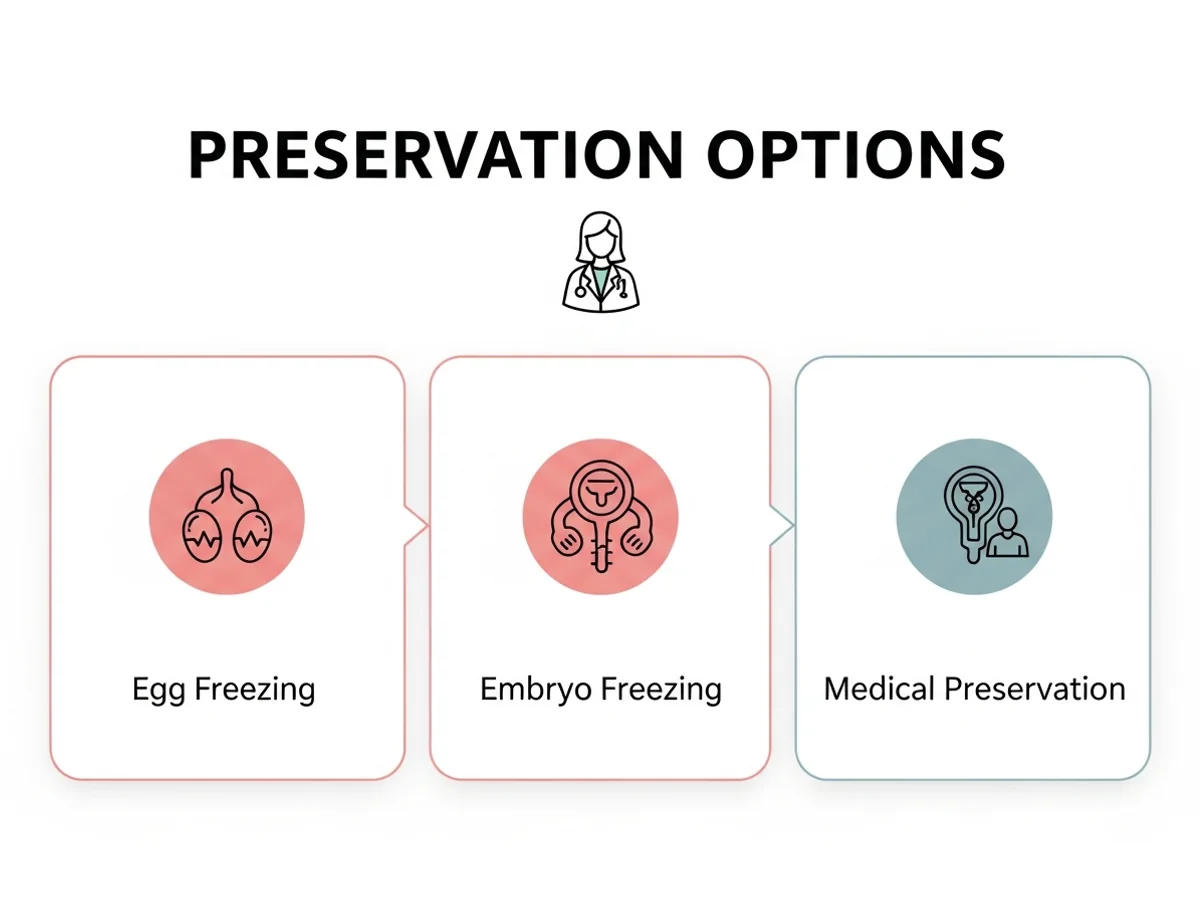
Fertility Preservation Options
Social Egg Freezing
Elective fertility preservation for women who are not ready to conceive but want to safeguard future options. Best performed before age 35, when egg quality and quantity are optimal.
Medical Fertility Preservation
Urgent egg freezing before gonadotoxic treatments such as chemotherapy, radiation, or ovarian surgery. Random-start protocols allow stimulation to begin immediately regardless of cycle day.
Embryo Freezing
For women with a partner or using donor sperm, eggs can be fertilised and the resulting embryos vitrified. Embryos have slightly higher post-thaw survival rates than eggs and are ready for direct transfer when needed.
Ovarian Tissue Cryopreservation Referral
For prepubertal patients or those who cannot delay cancer treatment for ovarian stimulation, Dr. Rukkayal coordinates referrals for ovarian tissue freezing at specialised centres.
Why Choose Dr. Rukkayal?
- Dr. Rukkayal's hands-on approach ensures that egg maturity is evaluated and the vitrification process is overseen with direct lab expertise in every case.
- Modern vitrification protocols with post-thaw egg survival rates above 90 percent.
- Rapid-start stimulation protocols available for oncology patients, with retrieval possible within 10 to 14 days of referral.
- Thorough pre-freezing counselling covering realistic success expectations based on your age and egg yield.
- Secure long-term storage with continuous liquid nitrogen monitoring and backup systems.
- Convenient locations across Chennai — Kilpauk, Mylapore, Thiruvanmiyur, and Pallikaranai — plus visiting consultant at Apollo, Motherhood & Cloudnine hospitals.
Your Treatment Journey
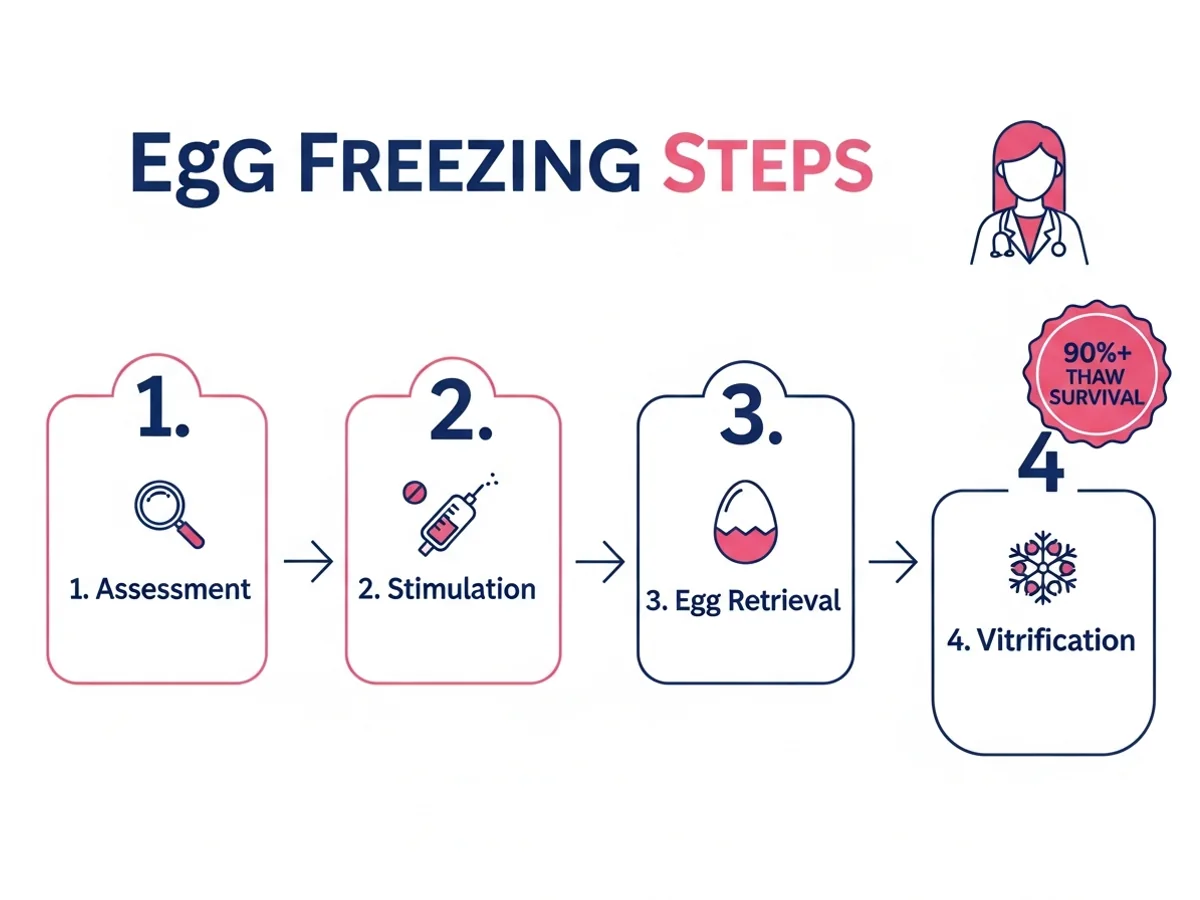
Fertility Assessment and Counselling
Dr. Rukkayal evaluates your ovarian reserve through AMH, FSH, and antral follicle count. She provides a realistic estimate of how many eggs to target based on your age and discusses the process, timeline, and future use scenarios.
Ovarian Stimulation
Injectable medications stimulate the ovaries over 10 to 12 days to develop multiple mature eggs. Serial ultrasound scans and blood tests monitor your response, with dose adjustments as needed.
Egg Retrieval
A 15 to 20-minute ultrasound-guided procedure under light sedation retrieves mature eggs from the ovaries. You rest for a short period and go home the same day.
Egg Assessment and Vitrification
Dr. Rukkayal personally assesses each egg for maturity. Mature eggs are prepared with cryoprotectant solutions and vitrified using ultra-rapid cooling. Each egg is stored in individually labelled carriers in liquid nitrogen.
Storage and Future Planning
Eggs are stored securely in monitored liquid nitrogen tanks. You receive documentation of the number and quality of eggs frozen. When you are ready to conceive, eggs are thawed, fertilised, and embryos are transferred using standard IVF protocols.

Have Questions About Your Treatment?
Book a consultation with Dr. Rukkayal Fathima to understand your options and next steps.
Frequently Asked Questions
The ideal window is between 25 and 35, when egg quality and quantity are both favourable. Freezing before 30 typically yields the highest-quality eggs with the best future success rates. After 35, egg quality declines progressively, and more eggs may need to be frozen to achieve the same probability of a future pregnancy.
For women under 35, freezing 15 to 20 mature eggs gives approximately a 70 to 80 percent cumulative chance of at least one live birth. Between 35 and 38, the recommendation increases to 20 to 25 eggs. This may require one or two stimulation cycles depending on ovarian response. Dr. Rukkayal sets clear expectations based on your reserve.
Vitrified eggs can be stored indefinitely in liquid nitrogen without quality degradation. There is no biological time limit — eggs frozen at 28 retain the quality of a 28-year-old regardless of whether they are used five or fifteen years later. Storage duration does not affect thaw survival or pregnancy success.
The stimulation phase involves daily subcutaneous injections, which most women find manageable with fine needles. Some bloating and mild pelvic fullness are common as follicles grow. The retrieval is performed under light sedation, so you feel no pain during the procedure. Recovery takes one to two days for most patients.
Egg freezing stores unfertilised eggs — you do not need a partner or donor sperm at the time of freezing. Embryo freezing stores fertilised embryos, which have slightly higher survival rates after thawing. If you have a committed partner, embryo freezing may offer a marginal advantage, but egg freezing provides full reproductive autonomy.
Yes, and timing is critical. Dr. Rukkayal uses random-start stimulation protocols that begin immediately regardless of your cycle day, completing egg retrieval within 10 to 14 days. She coordinates directly with your oncology team to ensure fertility preservation does not delay your cancer treatment schedule.
When you decide to conceive, your eggs are warmed using a controlled thawing protocol. Surviving eggs are fertilised with your partner's or donor sperm using ICSI (since the freezing process hardens the egg shell). The resulting embryos are cultured and the best-quality embryo is transferred to your prepared uterus.
No. The eggs retrieved during a freezing cycle are eggs that would have been naturally lost that month anyway — ovarian stimulation rescues eggs that would otherwise degenerate. Your overall egg reserve, hormone levels, and future natural fertility are not affected by one or two egg freezing cycles.
There is no strict cutoff, but the benefit of egg freezing diminishes significantly after age 38 due to declining egg quality. Women over 38 may need multiple cycles to bank enough eggs, and the per-egg success rate is lower. Dr. Rukkayal assesses your ovarian reserve and counsels you honestly about whether egg freezing is likely to offer meaningful benefit at your current age.
Success rates depend primarily on the age at which eggs were frozen and the number stored. Eggs frozen before age 35 have the highest fertilisation and implantation potential. When 15 to 20 mature eggs are banked from a woman under 35, cumulative live birth rates of 70 to 80 percent have been reported in large studies. Dr. Rukkayal provides personalised projections based on your age and ovarian reserve.
Related Specialties
Donor Egg IVF
An alternative for women whose own eggs are no longer viable, using screened donor eggs for IVF.
IVF Treatment
The treatment pathway used when frozen eggs are eventually thawed and fertilised for embryo transfer.
Frozen Embryo Transfer
The transfer technique used when frozen eggs are fertilised and embryos are ready for implantation.
Related Articles
Egg Freezing Cost in Chennai: Is It Right for You?
Understand egg freezing costs in Chennai, success rates, and the process. Expert advice from Dr. Rukkayal Fathima.
10 min read
Egg Freezing: Is It Right for You?
Comprehensive guide to egg freezing in Chennai: process, costs, success, & age limits. Learn if fertility preservation is right for you.
11 min read
Protect Fertility Before Cancer Treatment
Learn about fertility preservation options in Chennai before cancer treatment. Egg freezing, sperm banking, and more.
9 min read
Fresh vs Frozen Embryo Transfer: Which Is Best?
Understand fresh vs frozen embryo transfer in Chennai. Learn about success rates, benefits, and which option is right for you.
10 min read
Frozen Embryo Transfer (FET) Explained
Understand frozen embryo transfer (FET) in Chennai: process, success rates, costs, and what to expect. Expert guide by Dr. Rukkayal Fathima.
14 min read
Ready to Get Started?
Book a consultation with Dr. Rukkayal Fathima about your treatment options
Book AppointmentBook Consultation
Consultation Booked!
Thank you for reaching out. Our team will contact you shortly to confirm your appointment.
Need urgent help? Call us