Fruits to Increase Sperm Count
This article is part of our guide on Male Fertility in Chennai — see the full treatment overview, success rates, and costs.
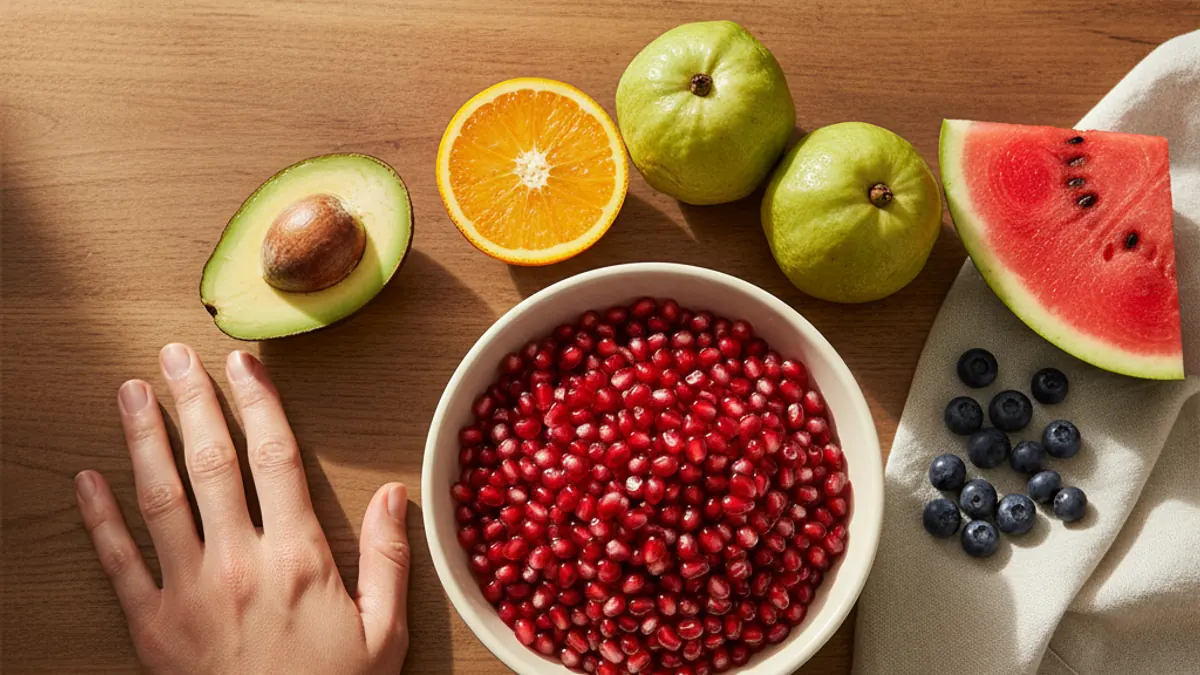
Quick answer: The fruits that genuinely help sperm count are pomegranate, guava, watermelon, bananas, oranges, berries, and avocado. They all work through the same mechanism — antioxidants (vitamin C, vitamin E, lycopene, folate, zinc) that protect sperm DNA from oxidative damage. You need at least 3 months of consistent daily intake (2–3 servings of whole fruit) to see measurable change on a semen analysis, because sperm production takes 74 days. Fruit alone helps a little; fruit plus sleep, exercise, no smoking, and moderate alcohol helps a lot. Supplements are an add-on, not a replacement.
"Doctor, my wife is sending me articles about fruits for sperm count — is it all just hype or does it actually work?" I get this question weekly in my Egmore clinic, usually from a husband who is skeptical but willing. The honest answer is: it works, but within realistic limits and over a realistic timeline. Let me walk you through what the evidence actually says and what I see in my male patients.
Why fruits matter for sperm — the real mechanism
Sperm cells are uniquely vulnerable to oxidative stress. They pack a huge amount of DNA into a tiny cell with very little repair machinery, and they have to survive hours of travel through the reproductive tract. Free radicals (from pollution, smoking, alcohol, poor diet, high stress) damage sperm DNA faster than the body can fix it — and damaged sperm can cause low count, poor motility, abnormal shape, and early miscarriage even when fertilization succeeds.
Fruit helps because it delivers concentrated antioxidants that neutralize those free radicals. Specifically:
- Vitamin C — protects sperm DNA from oxidative damage and improves motility. Clinical studies show supplementation can improve motility from ~31% to ~60% in deficient men.
- Vitamin E — protects the sperm cell membrane, improves motility.
- Folate (vitamin B9) — essential for healthy sperm DNA replication.
- Lycopene — linked to better sperm morphology (shape) and motility.
- Zinc — required for testosterone production and sperm formation.
- Selenium — supports sperm motility.
None of this is magical. It is basic cell biology. Sperm need protection, fruits provide it, and the body responds over 2–3 months.
The seven fruits I recommend most often
I keep the list short and realistic for Chennai households — these are all available year-round at every local market.
1. Pomegranate (anar)
Best for: motility, concentration, sperm quality. Rich in punicalagin, one of the most studied plant antioxidants for fertility.
How to take it: one bowl of fresh seeds daily, or 150 ml of freshly pressed juice. Avoid packaged juice — sugar overload.
2. Guava
Best for: sperm motility and DNA protection. Guava has more vitamin C than oranges — a single guava gives you 200–250% of daily vitamin C requirement.
How to take it: one medium guava daily, with the skin on. Chennai patients often skip it — I reintroduce it because it is cheap and powerful.
3. Watermelon
Best for: morphology (sperm shape) and motility. Rich in lycopene. Cooked tomatoes are also lycopene sources, but watermelon is easier in Chennai summer.
How to take it: 2–3 slices daily in summer, 100g on other days.
4. Bananas
Best for: energy, vitamin B6, bromelain. Bromelain may help regulate reproductive hormones.
How to take it: 1–2 per day. Not on an empty stomach if you have acidity.
5. Oranges and other citrus fruits
Best for: vitamin C and general antioxidant protection. A single orange provides about 160% of daily vitamin C.
How to take it: 1–2 whole oranges daily, or half a sweet lime + half a grapefruit. Please eat the fruit, not packaged juice.
6. Berries (strawberries, blueberries)
Best for: antioxidants and quercetin. Berries have the highest antioxidant density per gram of any fruit.
How to take it: a small bowl daily. Frozen berries work just as well as fresh and cost less.
7. Avocado
Best for: vitamin E, folate, zinc, and healthy fats. One avocado provides 41% of daily folate.
How to take it: half an avocado daily. Mashed on toast, in a salad, or blended into a smoothie.
Here is what I recommend to my patients — a realistic daily plan
I do not ask anyone to eat all seven fruits every day. That is unsustainable. Here is the plan that has worked for dozens of my male patients:
- Morning (with breakfast): one guava OR one orange
- Mid-morning snack: a small bowl of pomegranate seeds OR a banana
- Afternoon (with lunch): half an avocado in a salad OR two slices of watermelon
- Evening snack: a small bowl of berries (fresh or frozen)
That is 3–4 fruits a day, totally achievable, Chennai-friendly, and hits every antioxidant family. Stick with it for 12 weeks and then repeat the semen analysis. Do not check at 4 weeks — it will look the same because the sperm you produce in month 1 was formed before you changed your diet.
What the evidence actually shows
I want to be honest about the limits of the research. Here is what we know and what we do not.
- Strong evidence: antioxidant-rich diets improve semen parameters — count, motility, morphology. Multiple randomized trials and meta-analyses confirm this.
- Moderate evidence: vitamin C supplementation improves motility in men with baseline deficiency. Effect is smaller in men with already-adequate levels.
- Moderate evidence: men with high fruit and vegetable intake have higher sperm concentration and motility than men with low intake.
- Weaker evidence: specific "superfoods" by themselves do not fix fertility problems. The benefit comes from overall dietary pattern, not from a single fruit.
What this means in practice: adding fruits to a generally poor diet gives you a small-to-moderate boost. Adding fruits to a comprehensive lifestyle change — better sleep, less alcohol, stopping smoking, weight management — gives you the biggest improvement. I have seen patients double their sperm count in 4 months with a full reset. I have also seen patients who "added pomegranate juice" to an otherwise unchanged lifestyle see almost nothing.
Foods and habits to avoid — these matter as much as the fruits
The fastest way to undo fruit-based gains is to keep damaging sperm through other routes. In my clinic I spend as much time on the "avoid" list as the "eat more" list:
- Smoking — the single worst thing for sperm. If you smoke, quitting gives you a bigger boost than any fruit will.
- Alcohol above 2 drinks/day — reduces testosterone and damages sperm motility.
- Sugary drinks and packaged juice — insulin spikes and hormonal disruption.
- Processed foods and trans fats — oxidative stress.
- Pesticide-heavy produce — a study of 155 men found that those eating high-pesticide fruits and vegetables had 49% lower sperm count compared to those eating low-pesticide ones. Wash fruits well, buy organic when you can for the skin-on ones (apples, grapes, berries).
- Excessive heat — hot baths, saunas, tight synthetic underwear, laptop on the lap. Testes need to stay cooler than core body temperature.
- Anabolic steroids or testosterone supplements — these destroy natural sperm production. I have seen patients with gym-related steroid use present with almost zero sperm count.
Beyond fruits — the holistic plan
This is what I actually prescribe in my clinic when a patient comes in with low sperm count:
- Diet reset — 3–4 fruits daily, 2 handfuls of nuts, oily fish twice a week, cut processed foods.
- Weight — if BMI >28, lose 5–8% body weight over 3 months. Every kilogram of visceral fat lowers testosterone.
- Exercise — 30–40 minutes of moderate activity 5 days a week. Not extreme — extreme endurance training can actually lower sperm count.
- Sleep — 7–8 hours consistently. Sleep deprivation is under-recognized as a sperm count killer.
- Stress — not the vague "relax more" advice, but specific: identify the top 2 stressors, reduce one, accept the other.
- No smoking, no gym steroids, alcohol maximum 3 drinks/week.
- Repeat semen analysis at 12 weeks — then we decide whether further medical treatment is needed.
In about 60% of my male patients, this lifestyle reset improves the semen analysis enough that no further medical treatment is needed. The other 40% need additional help — CoQ10, L-carnitine, antioxidant supplements, varicocele treatment, hormonal therapy, or assisted reproduction.
When should you see a fertility specialist?
Please book an appointment if:
- You and your partner have been trying for 12 months without success (6 months if the woman is over 35)
- You have a known varicocele (enlarged testicular veins) or a past testicular injury
- You have a history of mumps, undescended testes, chemotherapy, or radiation
- You are on long-term anabolic steroids or testosterone replacement
- You have erectile or ejaculation difficulties
- You have already had one semen analysis showing low count (less than 15 million/mL) or poor motility (under 40%)
- You would simply like a confidential male fertility check before trying for a baby
You can book an appointment at my Egmore clinic (morning 8 AM – 2 PM), at the Mylapore branch for an evening slot (5 PM – 9 PM), or at Tambaram on Thursdays and Sundays between 2 PM and 4 PM. Semen analysis is a simple, non-judgmental test. Most men feel much better after just getting the numbers.
In a word
Fruits are a real, evidence-backed tool for improving sperm count — but only as part of a full lifestyle plan, and only over 3 months. Pomegranate, guava, and oranges are the workhorses. Eat them whole, skip the juice, fix the sleep, cut the smoking, and repeat your semen analysis at 12 weeks. That is the honest, doctor-grade plan.
Related reading
- Automatic sperm release at night — is it good or bad? — the nocturnal emission question, explained clinically.
- Foods and habits to improve sperm health — the broader daily plan beyond fruit.
- Low sperm count — causes and treatment — when lifestyle alone is not enough.
For a fuller overview of male fertility care, see my male fertility page.

Dr. Rukkayal Fathima
MBBS, MS (OBG), MRCOG (UK), FRM (Kiel University)
Fertility Specialist, Obstetrician, Gynecologist & Laparoscopic Surgeon
Dr. Rukkayal Fathima is one of India's leading Gynaecologists and the best fertility doctor in Chennai. She has 12+ years of experience and treated 3000+ patients. She specialises in IVF, ICSI, TESA/Micro TESE, IUI, Early Pregnancy Scan, Menopause advice, and Gynaecological surgeries. She is a Co-founder & Director of Yaal Fertility and Women's Centre, the Best Fertility Center in Chennai.
Have Questions About Male Fertility?
Every situation is unique. Dr. Rukkayal Fathima provides personalised, evidence-based guidance across multiple locations in Chennai.
Frequently Asked Questions
Pomegranate, guava, watermelon, bananas, oranges, berries, and avocado. All of them work through the same underlying mechanism — antioxidants and specific vitamins (C, E, folate, lycopene, zinc) that protect sperm DNA from oxidative damage. Pomegranate and guava have the strongest direct evidence for improving sperm motility and concentration.
Give it at least 3 months. Sperm production (spermatogenesis) takes roughly 74 days, so the sperm you produce today was being made 2.5 months ago. Consistent dietary changes usually show measurable improvements in semen analysis after 3 months, with more significant changes visible at 6 months. Shorter timelines will not show anything.
Yes, substantially. Fruit alone gives a small effect. Fruit plus exercise, weight management, 7–8 hours of sleep, stopping smoking, and cutting alcohol gives a much larger effect. In my clinic, men who only change their diet see modest gains; men who change diet plus lifestyle sometimes double their sperm count in 3–4 months.
Aim for 2–3 servings of whole fruit daily. One serving is one medium orange, one medium guava, a small bowl of pomegranate seeds, a small bowl of berries, half an avocado, or two slices of watermelon. Eat the whole fruit rather than juice — juice concentrates sugar and strips out the fibre, which undoes most of the benefit.
₹800 to ₹1,500 at most reputable labs in Chennai, depending on whether the panel includes morphology (Kruger strict criteria), DNA fragmentation, or basic count only. In my Egmore clinic I usually recommend a full basic semen analysis first and order DNA fragmentation separately if we are investigating recurrent miscarriage or failed IVF.
No, food first. Whole fruits deliver antioxidants with fibre, water, and co-factors that supplements cannot replicate. I only prescribe antioxidant supplements (CoQ10, L-carnitine, zinc, selenium) when the semen analysis shows specific deficits or when the patient genuinely cannot meet the fruit intake. Supplements are add-ons, not replacements.
Consult Dr. Rukkayal in Chennai
Available at 4 fertility clinic locations across Chennai. Walk-ins welcome; appointments preferred.
No. 747, Poonamallee High Road, Alagappa Nagar, Kilpauk, Chennai – 600 010
No. 149/1, Luz Church Road, Bhaskarapuram, Mylapore, Chennai – 600 004
No. 95, Plot No. 1, Velachery Main Road, Devi Karumariamman Nagar, Pallikaranai, Chennai – 600 100
Dr. Rukkayal is also a visiting consultant at Apollo Hospital, Motherhood Hospital, Cloud Nine Hospital, MGM Hospital, Metha Hospital and St. Isabel Hospital in Chennai. View all clinic locations